
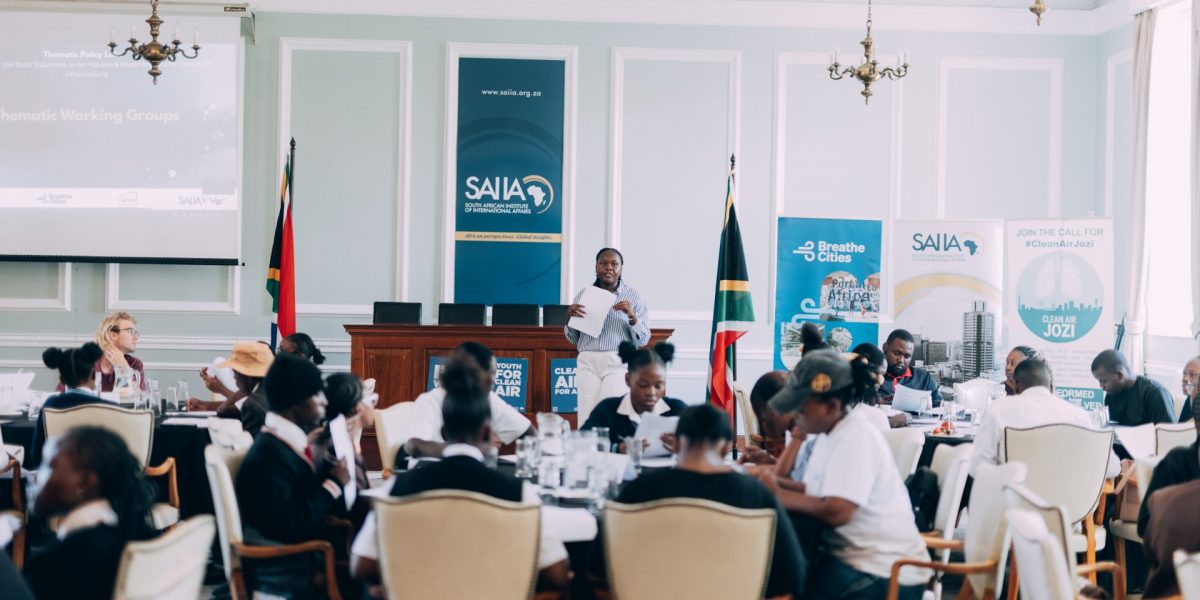
Presented on 26 February 2026, this statement crowns a year of joint advocacy by Youth@SAIIA, Breathe Cities and the City of Johannesburg. It serves as a formal advocacy tool that highlights lived experiences and solutions for better air quality management.
A recent survey of 3000 residents in Johannesburg found that 92% were concerned about air pollution; 75% experienced health issues associated with pollution and 18% felt vulnerable communities bore the biggest brunt. Johannesburg has alarmingly high levels of air pollution, recording PM2.5 levels that are often higher than what the World Health Organization recommends.
The statement was developed as a direct response to this crisis. It highlights young people’s daily reality and the real-world health impacts of toxic air, specifically focusing on marginalised communities and schools. Some of the key messages relate to:
- Public Health: The link between poor air quality and respiratory issues among children and youth.
- Governance & Accountability: A critical look at how current policies in South Africa lack effective implementation and accountability.
- Future Vision: Targets for a “2030 Clean Air Future” in Johannesburg.
The statement issues a call to action to decision makers to move from participation to co-governance with youth in managing Johannesburg’s air quality. It outlines specific demands from youth such as:
- Structured Policy Inclusion: The establishment of permanent, formal platforms where youth can contribute to air quality decision-making processes.
- School-Level Action: Support for the development of air quality action platforms specifically within schools and universities to protect developing lungs.
- Investment in Green Alternatives: Prioritising waste-to-value projects and clean mobility infrastructure to reduce the city’s reliance on high-emission practices.
- Improved Monitoring and Data: Early warning systems for poor quality air days and access to real-time data.
- Youth Opportunities: More green jobs for youth and support for youth-led recycling initiatives.
Additional Resource
The Air Aware: A Youth-Led Journey for Clean Air guide documents how young people in South Africa are reshaping the fight for environmental justice by connecting lived experience, community action and air quality policy reform.