
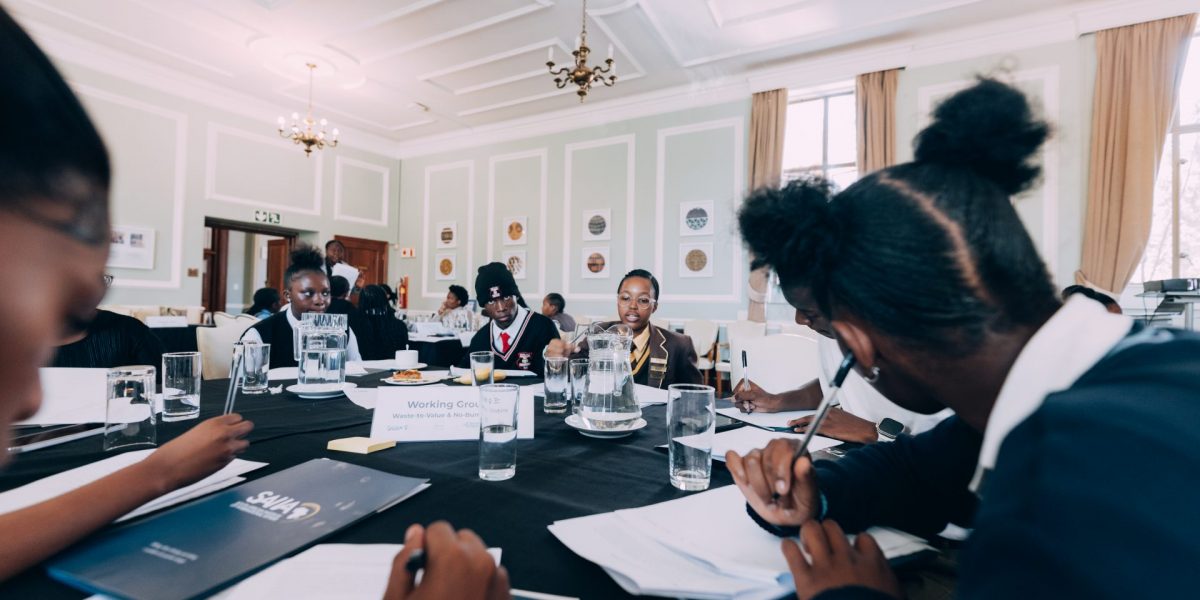
The Air Aware: A Youth-Led Journey for Clean Air guide is a living story of how young people in South Africa are reshaping the fight for environmental justice – one breath at a time.
Developed by Youth@SAIIA, as part of the global Breathe Cities initiative, this guide documents the evolution of a bold, youth-driven movement that connects lived experience, community action and air quality policy reform. It captures how young people moved from awareness to advocacy, from learning to leadership, and from local action to national policy dialogue.
It is a resource for young people (13-25 years) who want to act on environmental justice and air quality; educators and facilitators seeking to integrate air quality into curricula or programmes; NGOs and civil society organisations working on climate, health or youth empowerment; policymakers and government officials aiming to integrate youth voices into air quality policy meaningfully; and funders and partners interested in supporting high-impact, youth-led climate action.
It is designed to:
- Inspire young people to see themselves as credible leaders and change agents in the clean air movement.
- Support policymakers with grounded, youth-informed insights into air pollution’s real-world impacts.
- Bridge the gap between youth lived experience and formal air quality governance.
- Equip educators, NGOs and facilitators with practical tools, methodologies and campaign models.
- Document replicable approaches for scaling youth-led environmental advocacy.
At its core, this guide affirms a simple truth: young people are not just victims of polluted air – they are architects of cleaner, fairer futures.