

SAJIA Volume 33.2 is now available on the Taylor & Francis website.
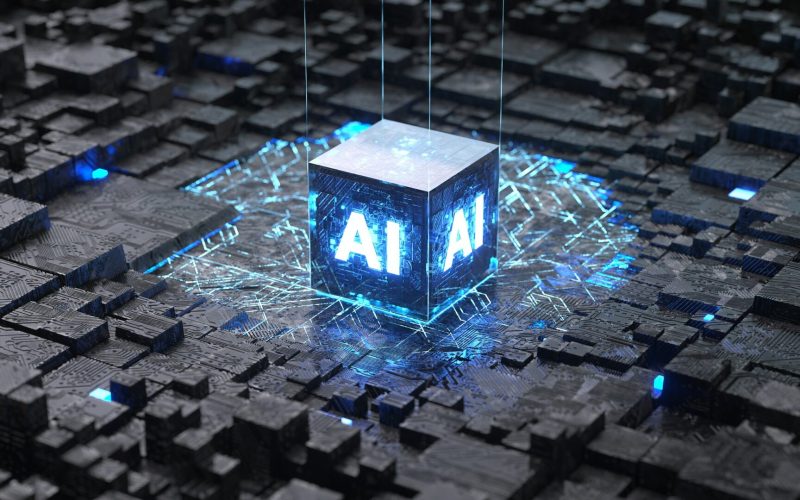
The Fourth Industrial Revolution is transforming societies at an unprecedented pace, reshaping politics, diplomacy, security and everyday life. As digital technologies become increasingly intertwined with international politics, they raise important questions about the future of peace on the African continent. What does peace mean in an environment of profound technological and societal transformation? Do new tools make peace less attainable, or do the new opportunities they offer for working towards peace present a net benefit for peacemaking on the continent?
The special issue, titled Digital Pathways to Peace in Africa, considers these questions by exploring both the opportunities and challenges presented by emerging digital technologies. Guest edited by Sven Botha, Markus Kornprobst and Cori Wielenga, it examines negative and positive notions of peace, as well as the internal (African) and external (extra-continental) forces shaping peace on the continent.
A theme running through the issue is the changing relationship between technology, international politics and security in Africa. The contributions consider what kind of peace the continent ought to aim for in an era of digital revolution and the role of tech diplomacy in pursuing it. They also navigate African agency in the context of US–China competition, including how states can leverage their critical minerals and growing digital markets. At the regional level, the issue considers the challenge posed by cyber-enabled terrorism and whether the AU’s counter-terrorism regime has kept pace with these developments.
At the same time, digital technologies are creating new possibilities – and new challenges – for peacebuilding and political participation. The issue considers how digital tools can be designed and used responsibly in peace interventions, while also examining the risks associated with misinformation, disinformation and surveillance. Contributions looking at Kenya, Nigeria and South Africa explore how digital technologies operate in practice: from the limits of fact-checking during elections and the use of digital activism in peacebuilding to the everyday digital practices of women traditional leaders and the ways communities repurpose surveillance infrastructure to foster trust and support peace.
Taken together, the contributions show the different ways in which technological transformation is shaping efforts to build and sustain peace across Africa. By moving between international, regional, national and local levels, the special issue considers both the opportunities offered by emerging technologies and the political, institutional and social challenges surrounding their use.
The issue concludes with five insightful book reviews covering PeaceTech, digital international relations, counterterrorism, and the role of digital technologies in elections and campaigns in Africa.
Editorial
Digital pathways to peace in Africa
Sven Botha, Markus Kornprobst and Cori Wielenga
Research Articles
Towards a tech diplomatic peace for Africa
Markus Kornprobst and Lauren Kook
Hedging the great powers: Africa exercising agency in the US-China competition in the 4IR
Dare Leke Idowu
Digital technology as a tool for peace interventions
Lesley Connolly and Samuel Igba
The timing trap: Misinformation, disinformation, and the limits of fact-checking in Kenya`s 2022 elections
Michael Asiedu
Local innovation and the politics of surveillance in African peacebuilding
Odilile Ayodele
Africa’s counter-terrorism regime in a technological age: How does the African Union measure up?
Sven Botha and Suzanne Graham
The role of ICT in peacebuilding in Nigeria: lessons from the #EndSARS and #BringBackOurGirls movements
Olukayode Bakare
Book Reviews
PeaceTech: Digital Transformation to End Wars, by Christine Bell, Springer, 2024
Reviewed by Brooks Spector
Digital International Relations: Technology, Agency and Order, by Corneliu Bjola and Markus Kornprobst (eds), Routledge, 2024
Reviewed by Samantha Schaller
Peace in Digital International Relations, by Oliver P. Richmond, Gëzim Visoka and Ioannis Tellidis, Cambridge University Press, 2023
Reviewed by Tyne Williams
Nigeria’s Counter-Terrorism Strategy: Constructions of Threat, Response and Identity, by Kodili Henry Chukwuma, Edinburgh University Press, 2025
Reviewed by Alex Vines
Digital Technologies, Elections and Campaigns in Africa, by Duncan Omanga, Admire Mare and Pamela Mainya (eds), Routledge, 2024
Reviewed by Nanjala Nyabola