
South Africa faces a binary choice on defence. It can fund the South African National Defence Force to match its foreign policy ambitions, which would require roughly doubling the defence budget from the current 0.78% of GDP to at least 1.5%. Or it can accept a diminished level of ambition, scaling back peace-enforcement commitments and recasting its continental role as diplomatic rather than military. The one path it can no longer credibly walk is the one it is on: maintaining ambitious commitments while starving the force tasked with executing them.
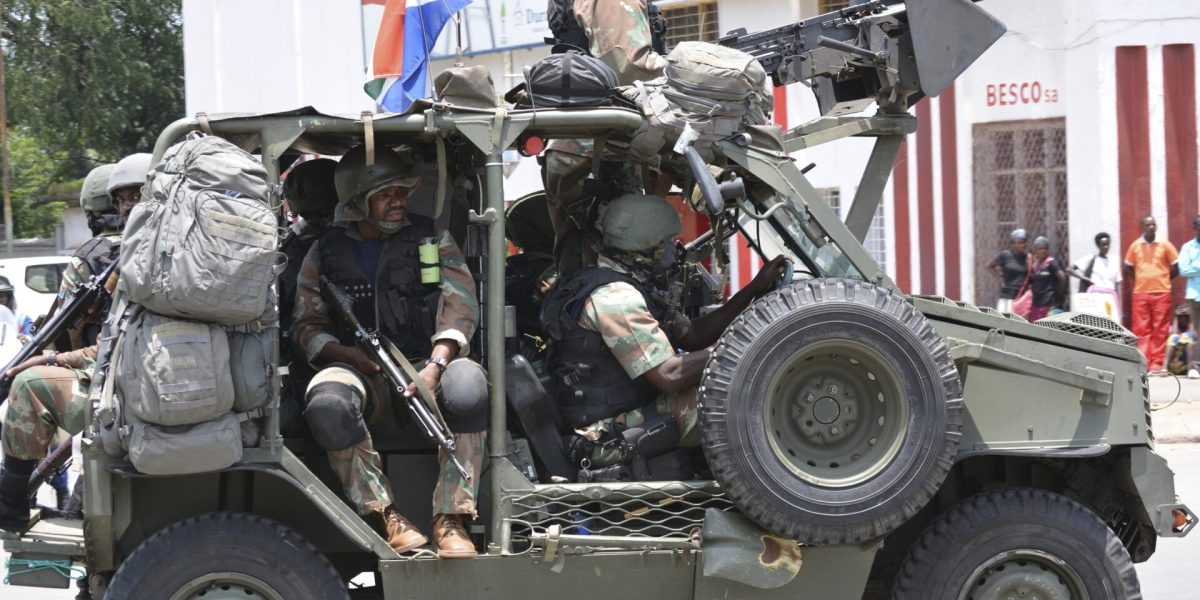
The paper develops this case at three levels of analysis. At the tactical level, South African soldiers continue to perform creditably and sometimes admirably in combat: Bangui, Cabo Delgado and Goma all bear this out. At the operational level, the force is critically deficient in rotary-wing aviation, strategic airlift, ammunition and joint logistics. At the strategic level, deployments have been ordered without clear objectives, exit criteria or alignment with actual military capacity.
Tactical competence cannot redeem operational and strategic failure. Four case studies trace the pattern: the 2013 Battle of Bangui; the SADC Mission in Mozambique (SAMIM, 2021–2024); the SADC Mission in the DRC (SAMIDRC, 2023–2025), which ended in strategic defeat at Goma with 14 South African soldiers killed; and the maritime Operation Copper (2011–present). Together, these pressures create an inescapable set of policy choices for South Africa’s government.