
Every year brings another UN Climate Change Conference (COP) – 31 and counting. Shouldn’t we have things figured out by now?
It’s easy to get frustrated with the pace of climate diplomacy. At the same time, it is important to be aware that progress is being made – the issues discussed at the first COP in 1995, or when the Paris Agreement was adopted at COP21 in 2015, are not the same as those being discussed today. Important principles have been agreed: countries have acknowledged that climate change is a global problem that requires a global response, but that those countries that have emitted the most greenhouse gases have a special responsibility to show leadership and help countries with fewer resources to address climate change. Essentially, this is what we mean by the principle of common but differentiated responsibilities and respective capabilities.
It is helpful to think about the global climate response as resting on three pillars:
- Mitigation: how do we stop causing climate change – primarily by shifting away from fossil fuels?
- Adaptation: how do we protect ourselves from the climate change that we have not been able to avoid?
- Loss and damage: how do we deal with the harm caused by climate change?
On mitigation, we have seen the massive expansion of renewable energy and the consolidation of an agenda for a just energy transition. On adaptation, which tends to receive far less funding than mitigation, concrete steps have been taken to implement the Global Goal on Adaptation, including identifying adaptation indicators and establishing the Belém-Addis Vision on Adaptation. On loss and damage, we have seen the establishment of a dedicated Fund for Responding to Loss and Damage, alongside the development of modalities for disbursing funds. The first disbursements are likely to go to Nepal to help it address the damage caused by melting glaciers earlier this year.
On all these points, it is true that what has been achieved is not sufficient – indeed, our achievements are dwarfed by the scale of the challenges we face. But progress is being made. While our most ambitious climate goal – keeping global warming below 1.5°C – is slipping out of reach, every tonne of carbon emissions we can avoid, every dollar we can invest in increasing the adaptive capacity of our communities and economies, and every commitment to helping countries address climate-related loss and damage brings us closer to a more climate-resilient future.
What makes this year’s COP worth paying attention to?
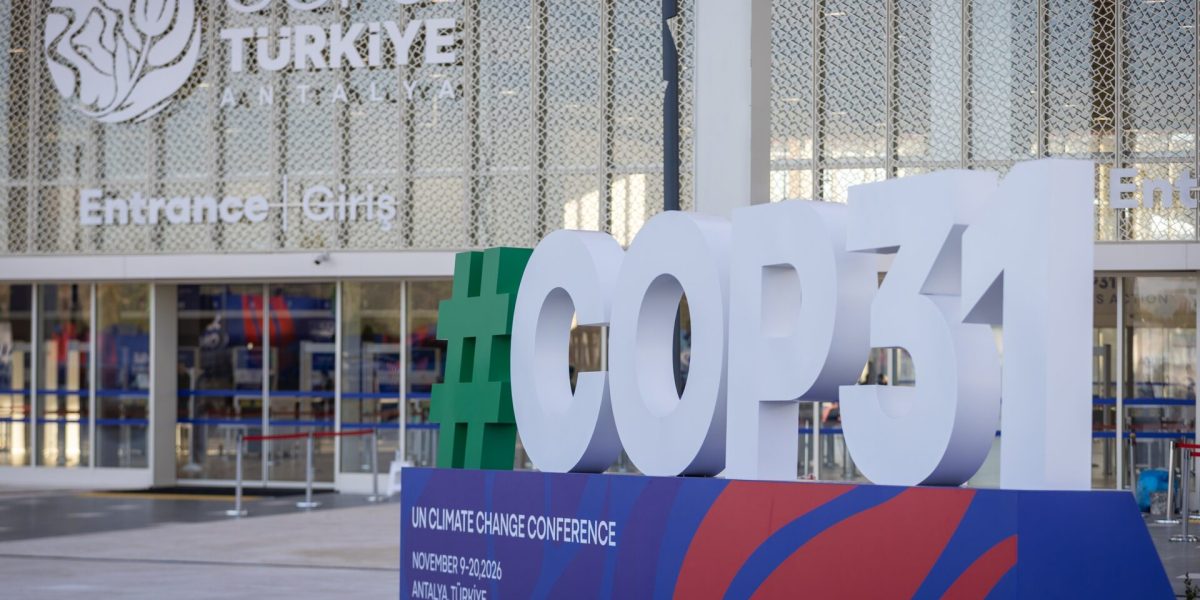
This year’s COP in Antalya, Türkiye (co-hosted with Australia), is being billed as an ‘implementation COP’. This means the focus is on advancing processes and agreements reached at previous COPs, rather than negotiating major new agreements. That does not make this year’s COP any less important. High-level agreements matter, but so does the difficult work of agreeing on modalities, indicators, institutional structures and implementation mechanisms that allow these agreements to make a real difference on the ground.
On climate finance, progress is needed on operationalising the New Collective Quantified Goal on Climate Finance, agreed at COP29. We also need to advance the operationalisation of the Global Goal on Adaptation, refine the Belém indicators and clarify how the commitment to tripling adaptation finance will be delivered. Further progress is needed on the Just Transition Mechanism agreed at COP30 and on translating international commitments into practical national investment and implementation programmes. Finally, we need to advance the operationalisation and financing of the Fund for Responding to Loss and Damage, particularly its ability to support vulnerable developing countries.
Although this is being framed as an implementation COP, we can also expect important initiatives championed by Türkiye. These include efforts to connect developing countries with existing financing and technical support through the BRIDGE initiative, scale up city-level resilience investments through the Sustainable Urban Resilience Financing Facility, and advance negotiations on supporting the responsible use of AI for climate action.
What does Africa want from this year’s COP?
Africa has been very consistent in its messaging in global climate negotiations, reflecting the excellent work of bodies such as the Africa Group of Negotiators, the African Union and the Committee of African Heads of State and Government on Climate Change, together with the policy foundation established by the AU’s Climate Change and Resilient Development Strategy and Action Plan.
Africa’s messaging has emphasised the need to focus on adaptation and loss and damage, rather than on mitigation alone. Finance has always been a priority for Africa, not only in terms of increasing the quantity of financing but also ensuring that it is accessible. Recently, there has been a growing focus on the risks associated with debt financing for climate action. Much climate financing takes the form of concessional loans, but even when this financing is provided at low interest rates, it can still have a significant impact on countries’ debt positions. African negotiators will seek to advance solutions to the challenges surrounding climate financing, including through innovative financing mechanisms such as debt-for-climate swaps. Africa will work with other developing countries and regions to ensure that developed countries do not backslide on their climate finance commitments, while also emphasising the need for technology transfer and other forms of technical support. Many countries across the continent have established country platforms to mobilise and direct financing towards mitigation and adaptation priorities. This is an area that many African stakeholders will be watching closely.
There is another important element: next year will be an ‘Africa COP’, with Ethiopia hosting COP32. Work has already begun on identifying priorities and mobilising political and financial support for Ethiopia’s COP presidency. Ethiopia, along with other African stakeholders, will be engaging partners at this year’s COP on its developing plans while also watching the negotiations closely to help set the stage for the Africa COP in 2027.
Lula da Silva won re-election in Brazil and, after the recent elections in the US, the Democrats now control both houses of Congress. Are we entering a more hopeful era of climate diplomacy?
There’s no doubt that climate diplomacy would have been in a tougher spot if these political events had not occurred. But, at the same time, I would caution against being overly optimistic. Some of the challenges we are experiencing are systemic. The fact is that the countries and institutions that have provided most of the climate finance are struggling. Increasingly, we are hearing discussions about how we can do more with less. Higher energy prices resulting from the war in Iran and the wider Gulf region have created an incentive for countries to reduce their dependence on oil and gas imports, but they have also pushed forward the energy security agenda, which can be used to justify ongoing investment in domestic fossil fuel resources.
All-or-nothing thinking can be tempting – we want to know whether our response to climate change is succeeding or failing, whether fossil fuels or renewables are winning, and whether we should hope or despair. The reality, unfortunately, is always messier than we would like. It is true that we are not doing enough to prevent climate change; it is also true that we are making significant progress. It is true that renewables now account for two-thirds of global energy investment; it is also true that billions continue to be invested in coal, oil and gas. It is true that climate change will impact poorer countries and communities the worst and that this is inherently unjust; it is also true that more money is going towards helping these countries and communities adapt to climate change and ensuring that opportunities are created for those who may be negatively impacted by the energy transition. While the scale of the challenge can seem overwhelming, the work must continue.
What is SAIIA focusing on at this year’s COP?
As always, SAIIA seeks to inform and amplify the African agenda in global climate negotiations. This means that we will engage with the African Union, the Africa Group of Negotiators, AUDA-NEPAD, the African Development Bank and fellow African think tanks to ensure that Africa’s priorities, including those related to climate finance, adaptation and loss and damage, are elevated in the COP negotiations.
There are, of course, some specific themes that we will be engaging with, building on the work we have done throughout the year with our partners. In this respect, we will be looking to contribute to discussions on the Just Transition Mechanism and the role of country platforms, building on our involvement in the Southern Country Platform Research Network (in partnership with the World Resources Institute, the Overseas Development Institute and several southern knowledge partners). On critical minerals, we will be promoting our work with the African Union around the African Green Minerals Observatory. Critical minerals, along with adaptation finance, are also central themes for us under the African Think Tank Platform, a World Bank-funded initiative that facilitates engagement between African think tanks and the African Union. Here, we will be bringing initial findings from our work, which we recently shared at the African Think Tank Summit, into our COP engagements. SAIIA has a strong body of work on nature diplomacy and ecosystem-based adaptation, showing how we can invest in ecological infrastructure to build a more climate-resilient future. There is also excellent work on green industrialisation developed by SAIIA’s Futures Programme that we will be seeking to promote, while our youth climate diplomacy efforts will be informed by the COP31 South African Youth Statement.
Resources and Contacts
You can access SAIIA’s climate-focused reports and briefings here, and those related to energy and the just transition can be accessed here.
If you have further questions about SAIIA’s climate work and our COP engagements, please reach out to:
- Alex Benkenstein, Head of SAIIA’s Climate and Natural Resources Programme, Alex.Benkenstein@saiia.org.za
- Romy Chevallier, Senior Climate Researcher, Romy.Chevallier@saiia.org.za