

The Economics of Illegal Mining

On 22 June, four suspected illegal miners were found dead with gunshot wounds to the head at a gold mine near Johannesburg. Earlier this year, a rescue operation to remove illegal miners from the abandoned Gold One mineshaft on South Africa’s East Rand, revealed a reluctance to be rescued for fear of arrest. This brings to attention the scale and intractability of efforts to curb illegal mining.
The Green Economy in the G-20, Post-Mexico: Implications for Russia

Over the past 20 years there has been a gradual shift in the concept of sustainable development towards an emphasis on a ‘green’ economy and the introduction of more environmental and social indicators in the understanding of sustainability and national well-being.
The Way Forward for the Southern African Development Community Economic Partnership Agreement

Negotiations on economic partnership agreements (EPAs) between the European Union (EU) and African, Caribbean and Pacific (ACP) countries will end on 1 October 2014.
Consolidating the African Governance Architecture

Collaboration and co-ordination among African Union (AU) and Regional Economic Community (REC) organs and institutions with the mandate to strengthen governance, human rights and democracy have been ad hoc and unpredictable. The results have been inefficiency, ineffectiveness, and duplication of efforts and resources.
BRICS, Mega-Regional FTAs and South Africa’s Trade Strategy

Global trade strategy does not appear to be a major focus of the Brazil, Russia, India, China, South Africa (BRICS) grouping, apart from the priority given to completing the stalled World Trade Organization Doha Development Round of negotiations.
Pan-Africanism, the African Peer Review Mechanism and the African Charter on Democracy, Elections and Governance: What Does the Future Hold?
Since Africa’s independence 50 years ago, its democratisation momentum has been marked by both progress and reversals.
State of the Nation: Follow-through now imperative
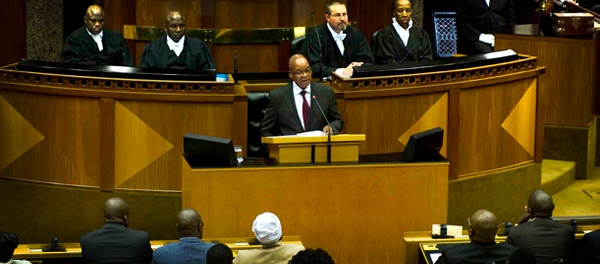
To President Zuma’s credit, last Tuesday evening’s State of the Nation Address went straight to the heart of South Africa’s triple challenge of poverty, inequality and unemployment. His vision of needed policy responses also put the National Development Plan (NDP) at the front and centre: government plans to achieve an economic growth rate of 5% by 2019.
The AU 23rd Summit: looking beyond Malabo

The African Union 23rd summit is convening in Malabo, Equatorial Guinea, on 20 June 2014. It will reach its zenith with the Ordinary session of the Assembly on 26-27 June. Irrespective of the agenda, which is not yet publicly communicated, or the summit theme ‘Agriculture and Food Security in Africa’, the final decisions and declaration document on 27 June is expected to be a congested one.
Southern Africa’s Dryland Forests, Climate Change and the Water–Energy–Food Security Nexus

Forests and trees in Southern Africa’s drylands provide a multitude of goods and services, ranging from timber and non-timber forest products (NTFPs) to carbon sequestration and the protection of watersheds and biodiversity.
Moving beyond ‘Trophy Diplomacy’: How to consolidate South Africa’s position in the world
Are South Africa’s foreign policymakers appropriately geared during the second term of the Zuma Administration to manage the expectations of its region effectively? More importantly, can South Africa integrate its economic goals successfully with its regional priorities?