

SADC should take a proactive stance on elections in Madagascar

After successive postponements and delays since a coup d’état in 2009, 33 candidates contested the presidential elections in Madagascar on 25 October 2013. Counting of the votes has not been completed and results are trickling in, with both the Malagasy and the international community waiting for a result that could potentially restore democratic governance in that archipelago.
Mozambique’s Foreign Policy: Pragmatic Non-Alignment as a Tool for Development

In October 2012 Mozambicans celebrated the 20th anniversary of the signing of the Rome General Peace Accord (GPA), which brought an end to the 15-year civil war that broke out two years after the country gained independence from Portugal in 1975.
A Dream Deferred? Reflections on Travels to the ‘Capital of Africa’

Travel in Africa can present serious challenges – especially if you are African.
Assessing Competitive Resource Tenders as an Option for Mining Rights Allocation in South Africa

The Mineral and Petroleum Resources Development Amendment Bill of 2013 (MPRD-AB) has generated fresh debate regarding the appropriate system for allocating mineral prospecting and mining rights in South Africa.
Traditional and Emerging Partners’ Role in African Regional Economic Integration: Issues and Recommendations
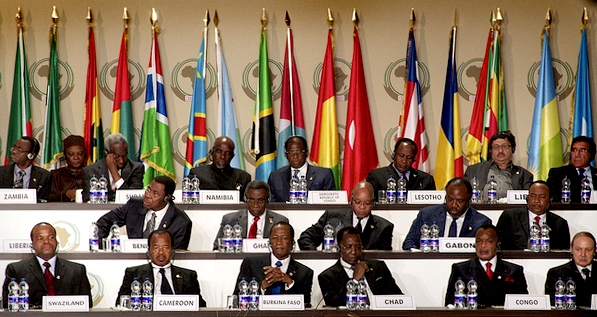
Regional integration in Africa is still an active agenda item for African nations and pan-African institutions such as the African Union.
Strengthening Peer Learning in the African Peer Review Mechanism: The Case for Best Practices
Identification of best practices is central to the African Peer Review Mechanism (APRM), which is meant to foster the adoption of policies that lead to good governance, sustained development, economic growth and enhanced integration on the continent. Although still underdeveloped and poorly defined, best practices can contribute to strengthening and achieving the objectives of the APRM.
A year in office: Dlamini-Zuma at the African Union

15 October 2013 marked a year in office for Nkosazana Dlamini-Zuma as Chairperson of the African Union Commission (AUC).
The Kimberley Process risks becoming irrelevant to cogent concerns

By prioritising consensus among its state parties and industry stakeholders in defiance of calls by civil society organisations (CSOs) for governance-enhancing reform, the Kimberley Process Diamond Certification Scheme (KPCS or KP) risks sleep-walking into irrelevance.
Russia’s Africa Policy

Russia is demonstrating robust commitment to reasserting its role in Africa. Its re-emergence as a significant African actor has been a recent phenomenon, and one that has received little scholarly attention to date.
Still Waiting for the Bonanza: The Oil Business in South Sudan after 2005

The paper examines the oil sector in South Sudan since 2005, when the historic Comprehensive Peace Agreement was reached between the Government of the former Sudan and the then rebel Sudan People’s Liberation Movement/Army.