
Rebel governance has emerged as a central lens for analysing political transitions in the aftermath of conflict. However, much of the existing literature has focused on the causes and drivers of rebel governance such as territorial control,1Zachariah Cherian Mampilly, Rebel Rulers: Insurgent Governance and Civilian Life during War (Cornell University Press, 2011), 1–294. rebel engagement with civilian populations,2Anne Marie Baylouny, ‘Born violent: Armed political parties and non-state governance in Lebanon’s civil war,’ Small Wars & Insurgencies 25, no. 2 (2014): 329 –53; Zachariah Mampilly and Megan A. Stewart, ‘A Typology of Rebel Political Institutional Arrangements,’ Journal of Conflict Resolution 65 no.1(2021):15–45. and the emergence of wartime institutions,3Ana Arjona, ‘Wartime Institutions: A Research Agenda,’ Journal of Conflict Resolution 58 no.8 (2014): 1360-89. with relatively little attention paid to its long-term outcomes.
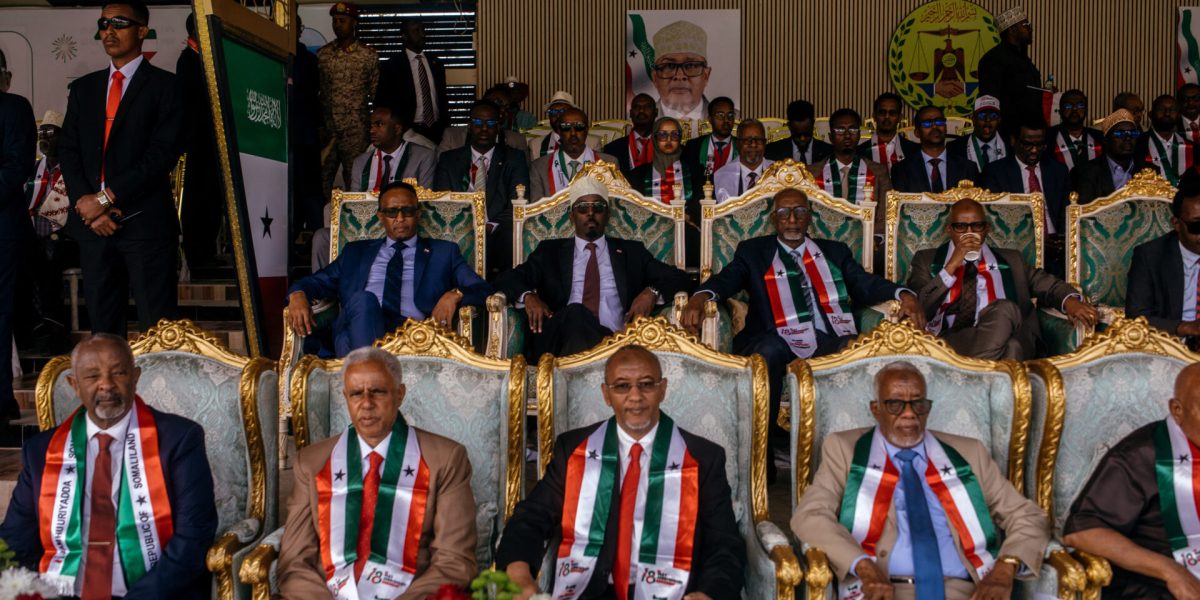
This article seeks to fill this gap by focusing on how the internal organisational structure of rebel groups – particularly the extent of their hierarchical structure and ideological coherence – and their wartime governance practices may influence their ability to transition into effective political governance actors after conflict. The article compares three African cases that illustrate differing organisational structures and divergent post-conflict trajectories: Somaliland, a de facto state governed by clan-based coalitions; Rwanda, where the hierarchical and ideologically driven Rwandan Patriotic Front (RPF) transitioned into a dominant ruling party; and Mozambique, where the ideologically rooted Resistência Nacional Moçambicana (RENAMO) joined a negotiated power-sharing arrangement.
Using a comparative process-tracing approach, the article analyses rebel governance both during conflict and throughout the post-conflict transition. Through a comparison of these cases, and by highlighting the importance of organisational coherence and wartime institutional experience, the article offers insights into how rebel movements can either contribute to or undermine governance effectiveness following conflict.
The study contributes to ongoing debates by emphasising how organisational structure influences the outcomes of transitions from rebellion to statehood. It aligns with recent scholarship that views civil war not as an isolated episode but as a social process whose dynamics connect pre-war, wartime and post-war periods through evolving interactions between state and non-state actors. It moves beyond viewing rebel governance as merely a wartime occurrence, instead framing rebel institutions as part of a wider, continuous process of state formation. By focusing on cases with divergent organisational features and post-conflict trajectories, the study offers empirical insight into how internal rebel dynamics condition state-building processes after conflict. In doing so, it contributes to the literature on rebel governance, state formation and political transitions in Africa.
This article first appeared in the South African Journal of International Affairs (Volume 33.1). The full issue can be found here.