
SAJIA Volume 33.1 is now available on the Taylor & Francis website. The issue brings together a diverse collection of articles from around the globe examining governance, conflict, intervention and international cooperation across Africa and the Global South. Several contributions engage with questions surrounding non-state actors, insurgent governance and the challenges of state-building in fragile and conflict-affected contexts.
The first article, by Abigail Kabandula, examines the practice of subsidiarity in global security governance through the African Union’s intervention in Somalia. Focusing on the challenges of coordination, financing and political alignment between the African Union, the United Nations and other actors, the article argues that regional peace operations remain constrained by structural inequalities and fragmented mandates. Continuing the focus on Somalia, a contribution from Bohumil Doboš compares Islamist insurgencies in Afghanistan and Syria with al-Shabaab in Somalia and Jama’at Nasr al-Islam wal-Muslimin in Mali, exploring whether insurgent movements in Africa could follow trajectories similar to those seen in recent Middle Eastern conflicts.
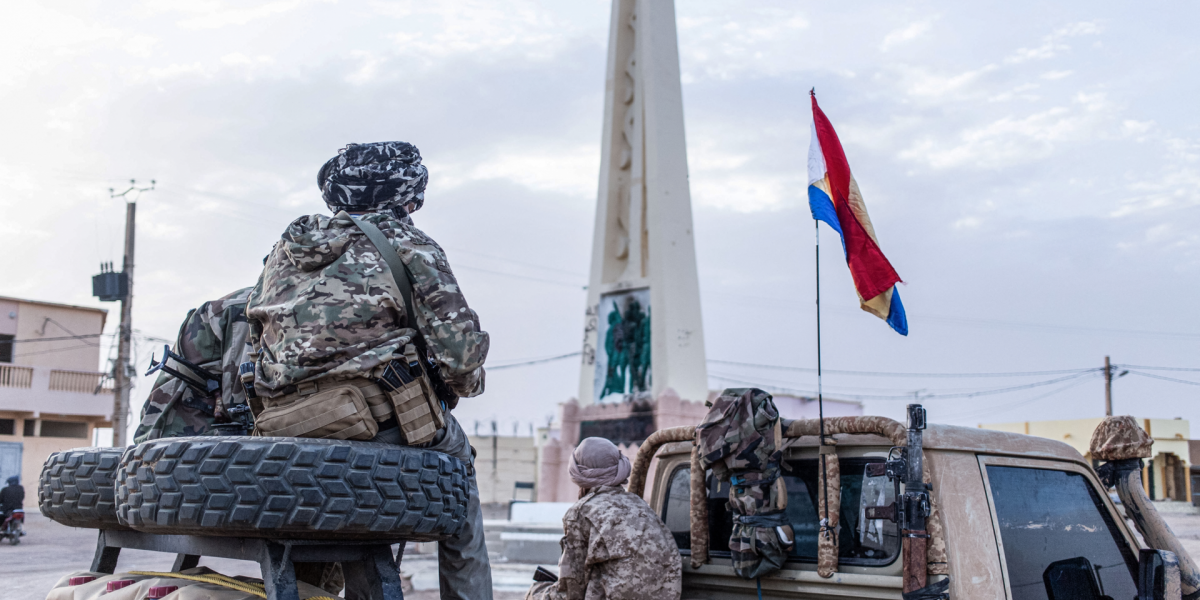
Questions concerning the governance role of armed groups are further explored in an article on Mali: Norman Sempijja and Mouhamed Ndiaye examine how non-state armed groups have emerged as important local power brokers in contexts where state institutions remain weak. The authors argue that external interventions focused narrowly on counter-terrorism and military responses often fail to account for the local legitimacy and governance functions these actors may acquire. The relationship between rebellion and governance is also explored in an article by Buyisile Ntaka, examining how rebel groups’ wartime organisational structures shape their post-conflict governing capacity. Drawing on cases from Somaliland, Rwanda and Mozambique, the article demonstrates that organisational cohesion and wartime governance experience play an important role in shaping post-conflict political transitions and state-building outcomes.
Beyond conflict and security, the issue also includes articles on development and international cooperation. Lauren Johnston analyses China’s emerging ‘Hunan Model’ and its implications for Africa-focused industrial development and economic cooperation. Sudheer Verma, Arpanpreet Kaur and Ashish Kumar examine climate cooperation between India and South Africa, highlighting both the potential and limitations of South-South cooperation in addressing climate and developmental challenges.
The issue further includes an assessment by Amani Rawand Ben Brahim of the Responsibility to Rebuild in post-2011 Libya, in which they argue that international rebuilding efforts following NATO’s intervention have remained fragmented and insufficient, with important implications for future post-conflict interventions and the credibility of the Responsibility to Protect doctrine.
A number of informative and thought-provoking book reviews conclude the issue, covering themes including global inequality, authoritarianism, liberation politics, African leadership and developmental governance.
Research Articles
Subsidiarity in global security governance: Lessons from the African Union
Abigail Kabandula
An Islamic emirate in Africa? Comparing the cases of Afghanistan and Syria with Somalia and Mali
Bohumil Doboš
Rethinking external intervention in the context of the rise of non-state actors as de facto authorities: The case of Mali
Mouhamed Ndiaye and Norman Sempijja
The ‘Hunan Model’: A new approach in China focused on economic development hurdles in Africa
Lauren Johnston
From rebellion to rule: Rebel group organisation and state-building in Africa
Buyisile Ntaka
The Responsibility to Rebuild in Libya: A call for a comprehensive reform amid post-intervention paralysis
Amani Rawand Ben Brahim
South-South Cooperation on climate change: An analysis of the partnership between India and South Africa
Arpanpreet Kaur, Ashish Kumar and Sudheer Verma
Book Reviews
‘Shared Prosperity in a Fractured World’, by Dani Rodrik
Reviewed by Alan Hirsch
‘Authoritarian Journalism: Controlling the News in Post-Conflict Rwanda’, by Ruth Moon
Reviewed by Richard Stupart
‘Liberation and Corruption: Why Freedom Movements Fail’, by Peter Hain
Reviewed by Terence Corrigan
‘Leadership in Independent Africa, Six Decades On: The Blended Representation Principle as a Cause for Afro-Optimism’, by Kofi Anani
Reviewed by Craig Bailie
‘Dams, Power, and the Politics of Ethiopia’s Renaissance’, by Dr Tom Lavers
Reviewed by Agathe Maupin-Buskin