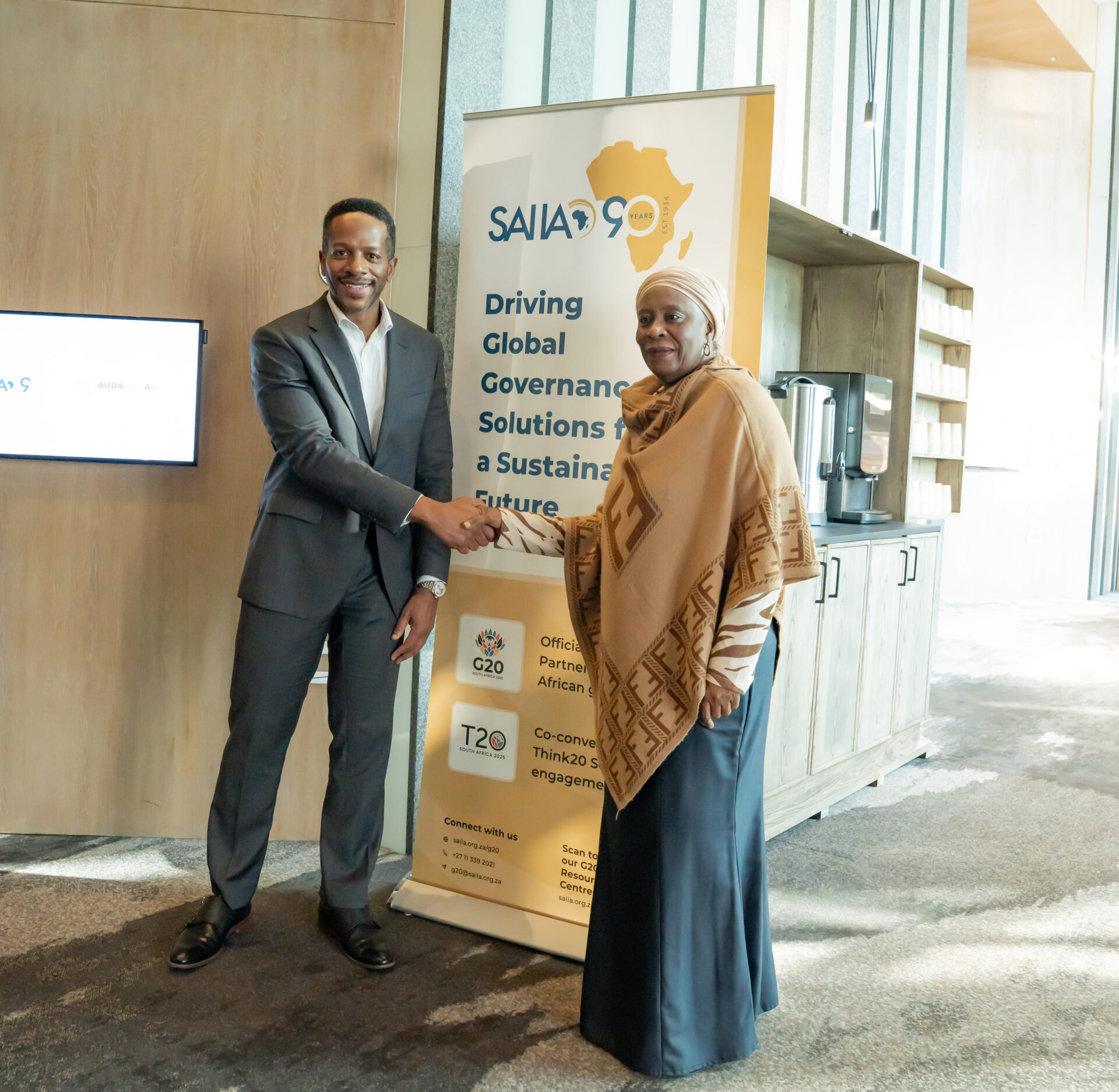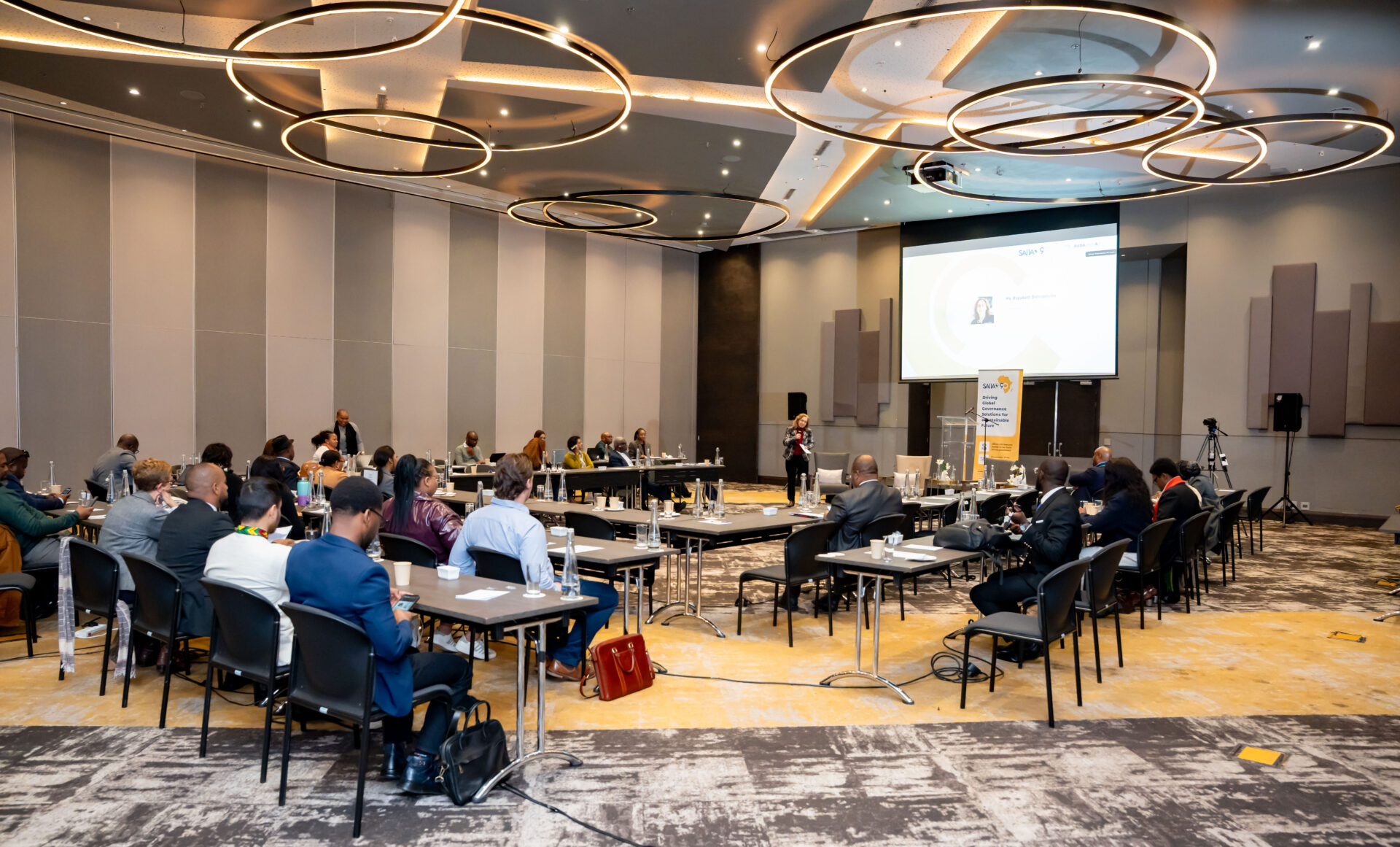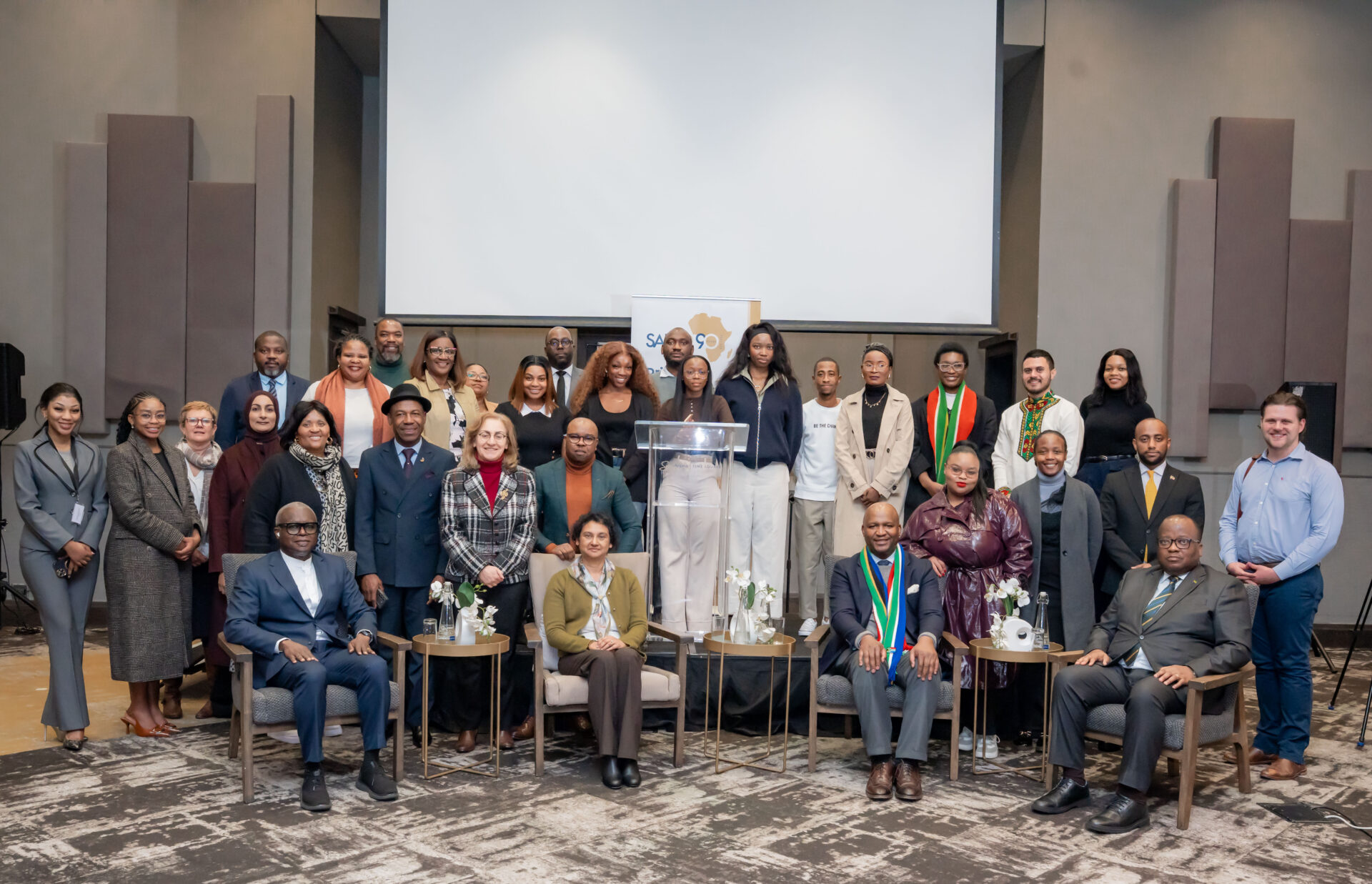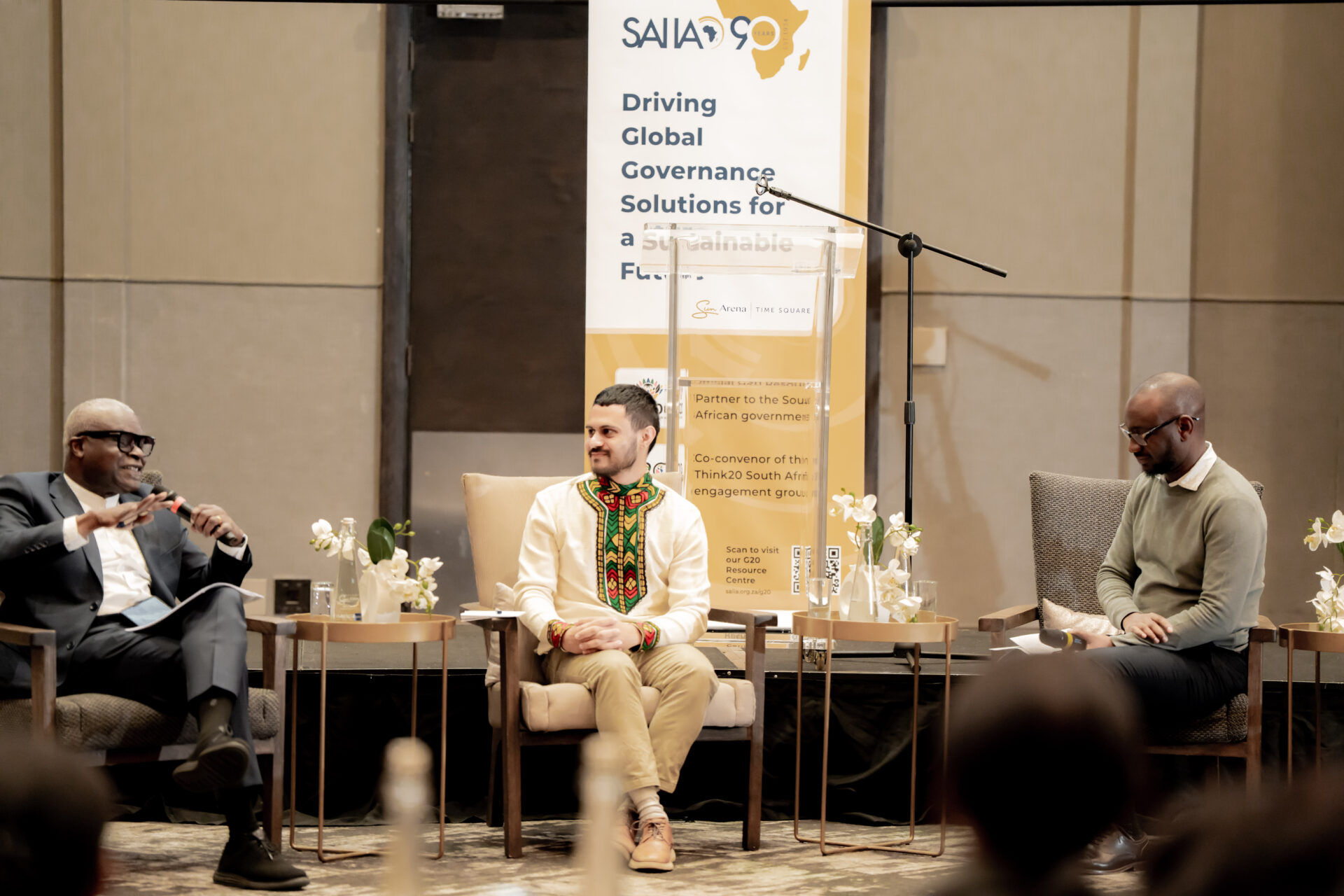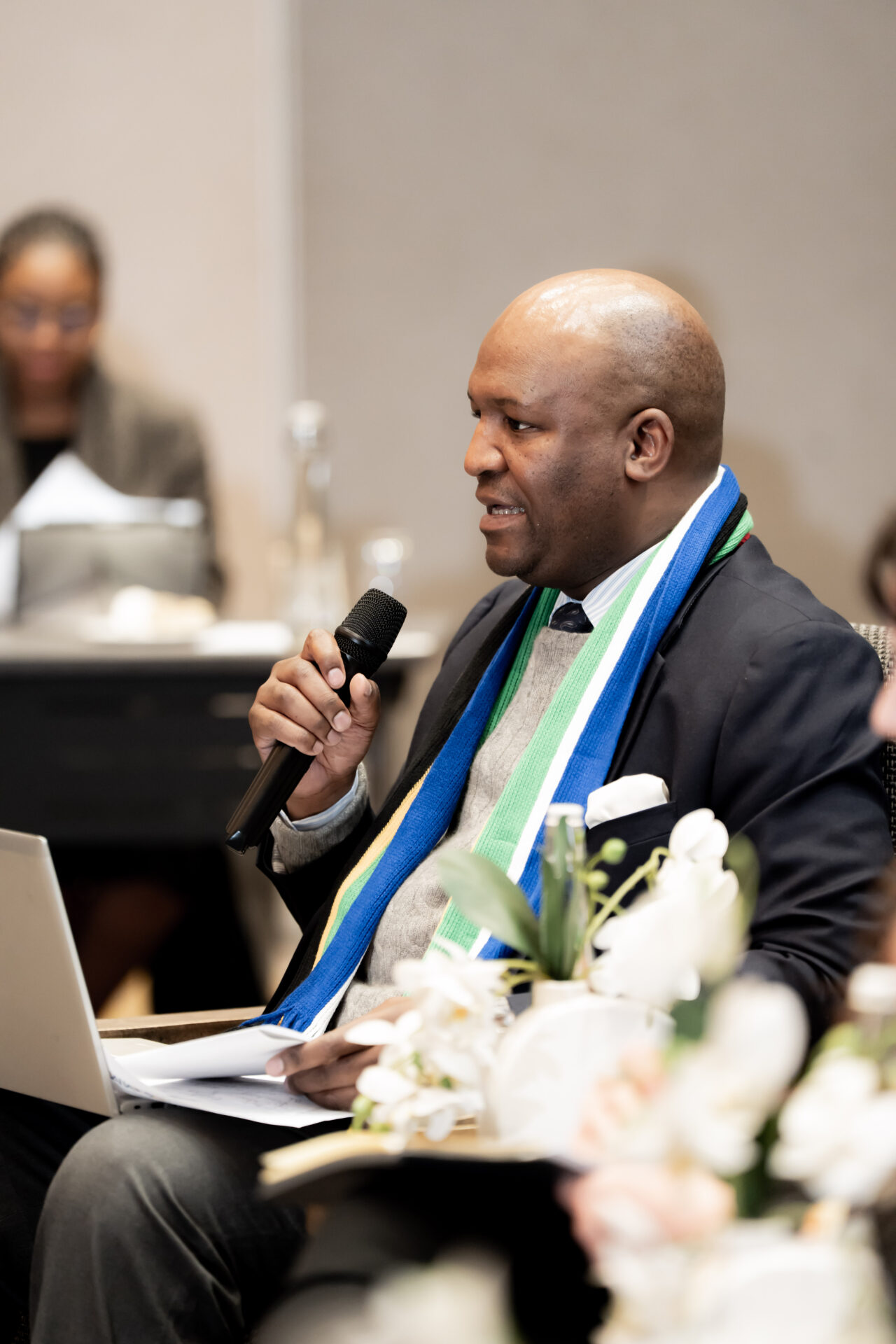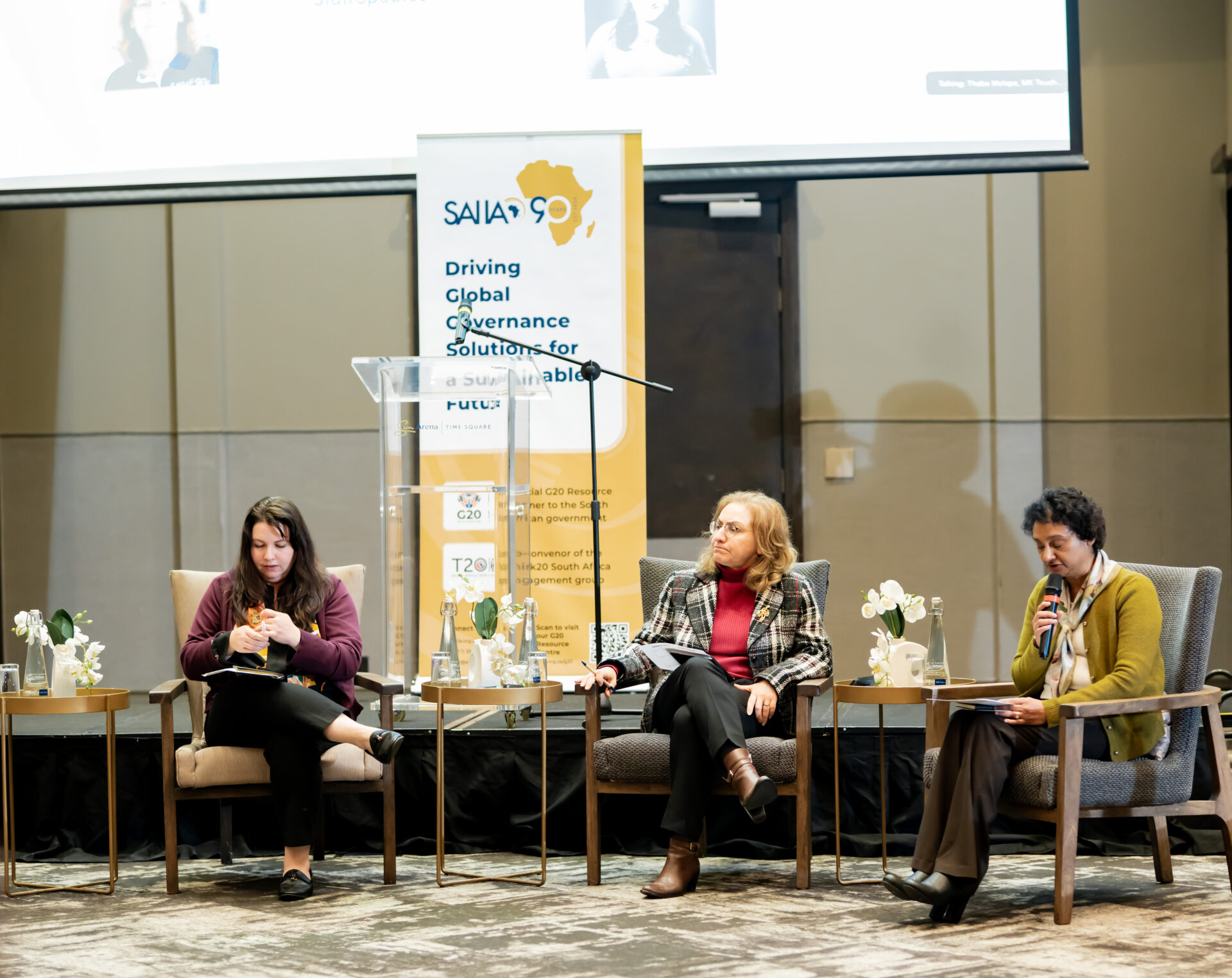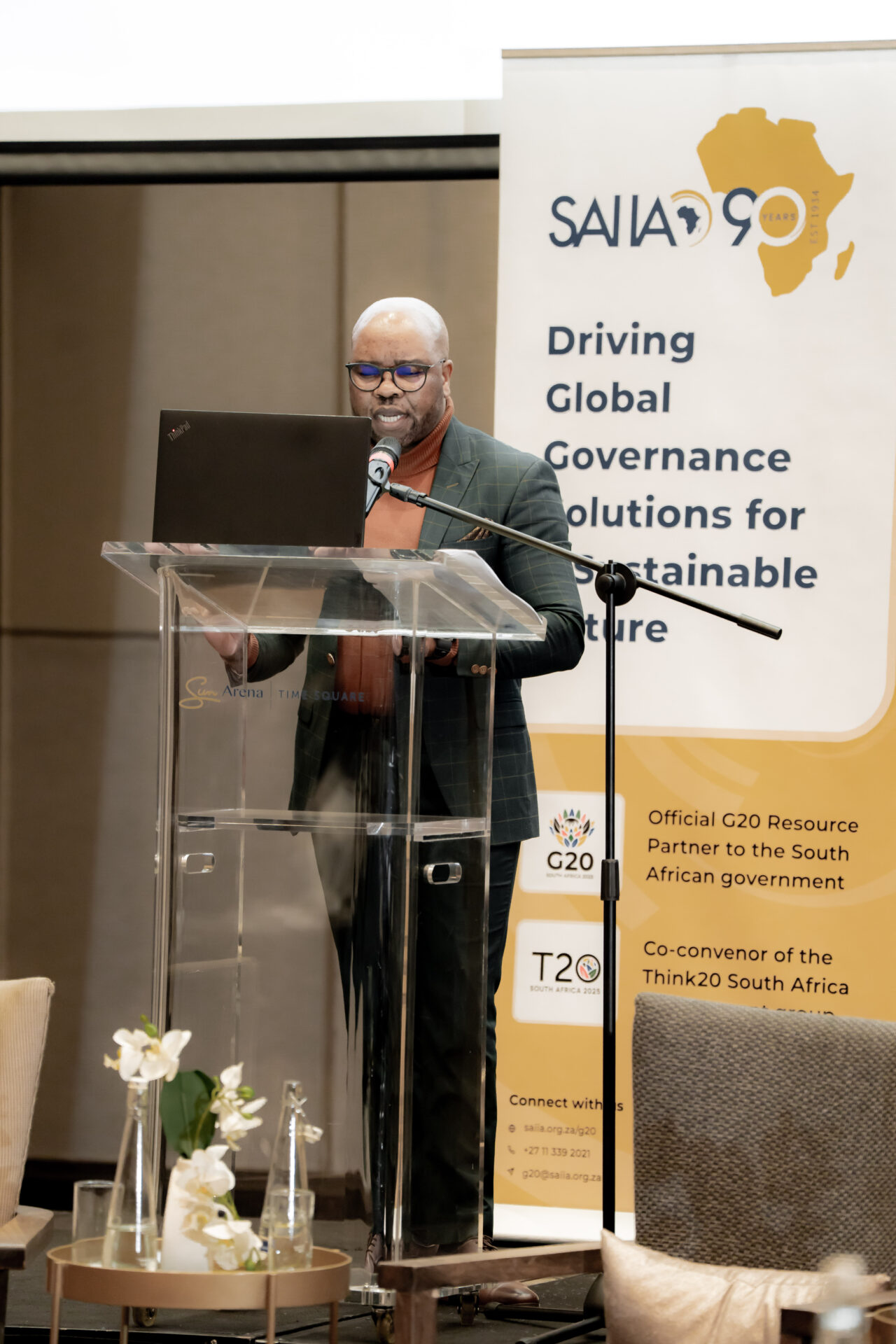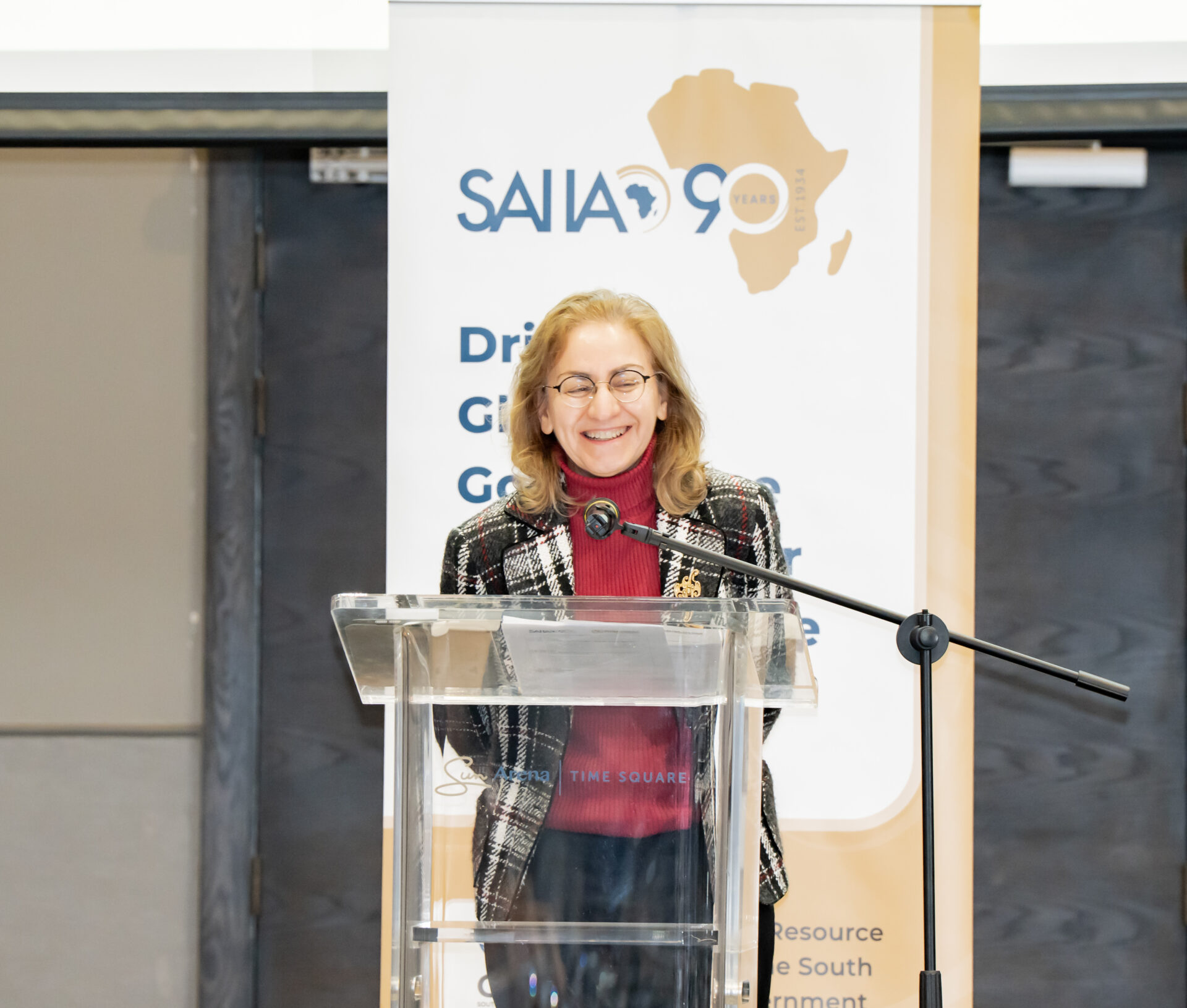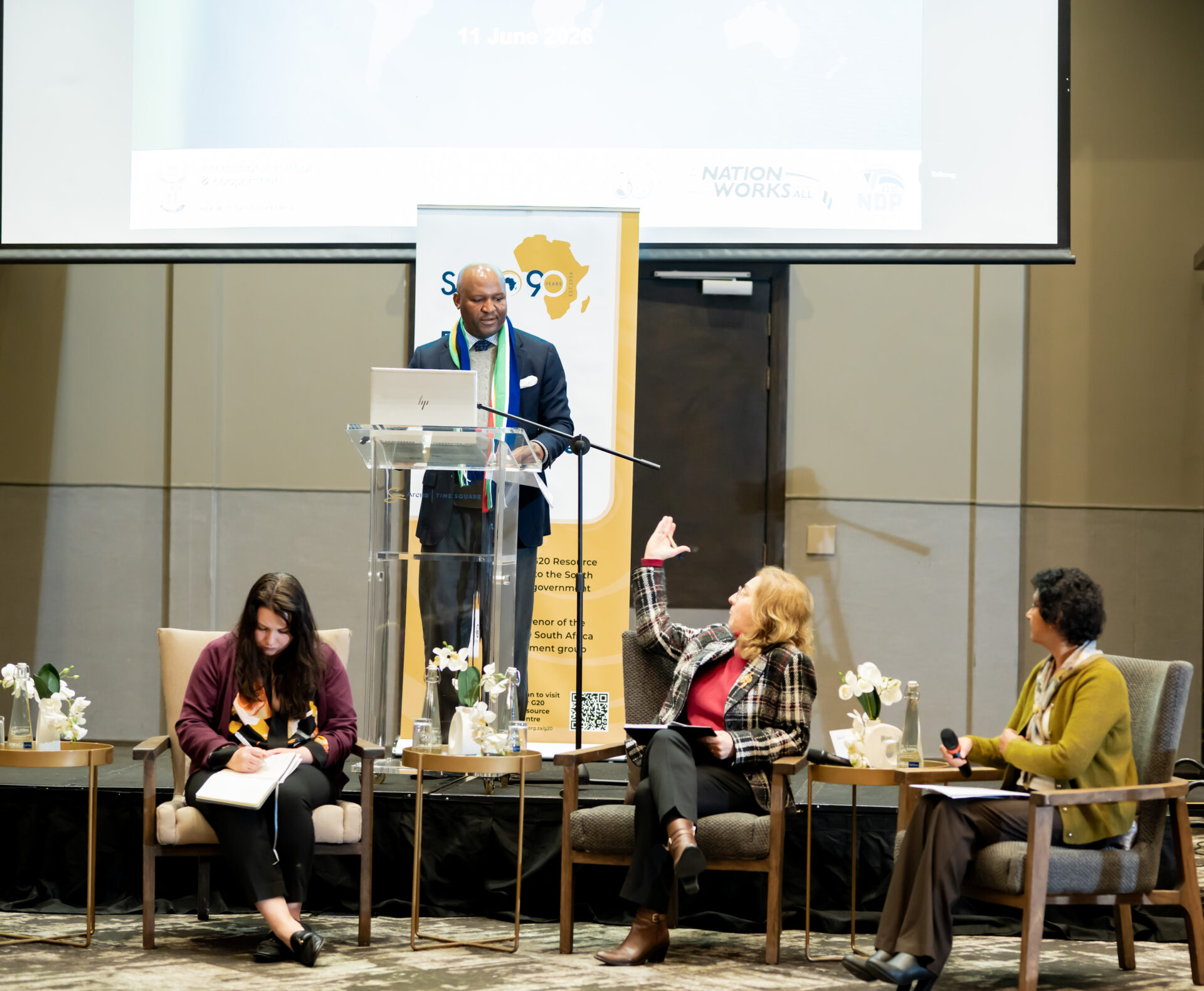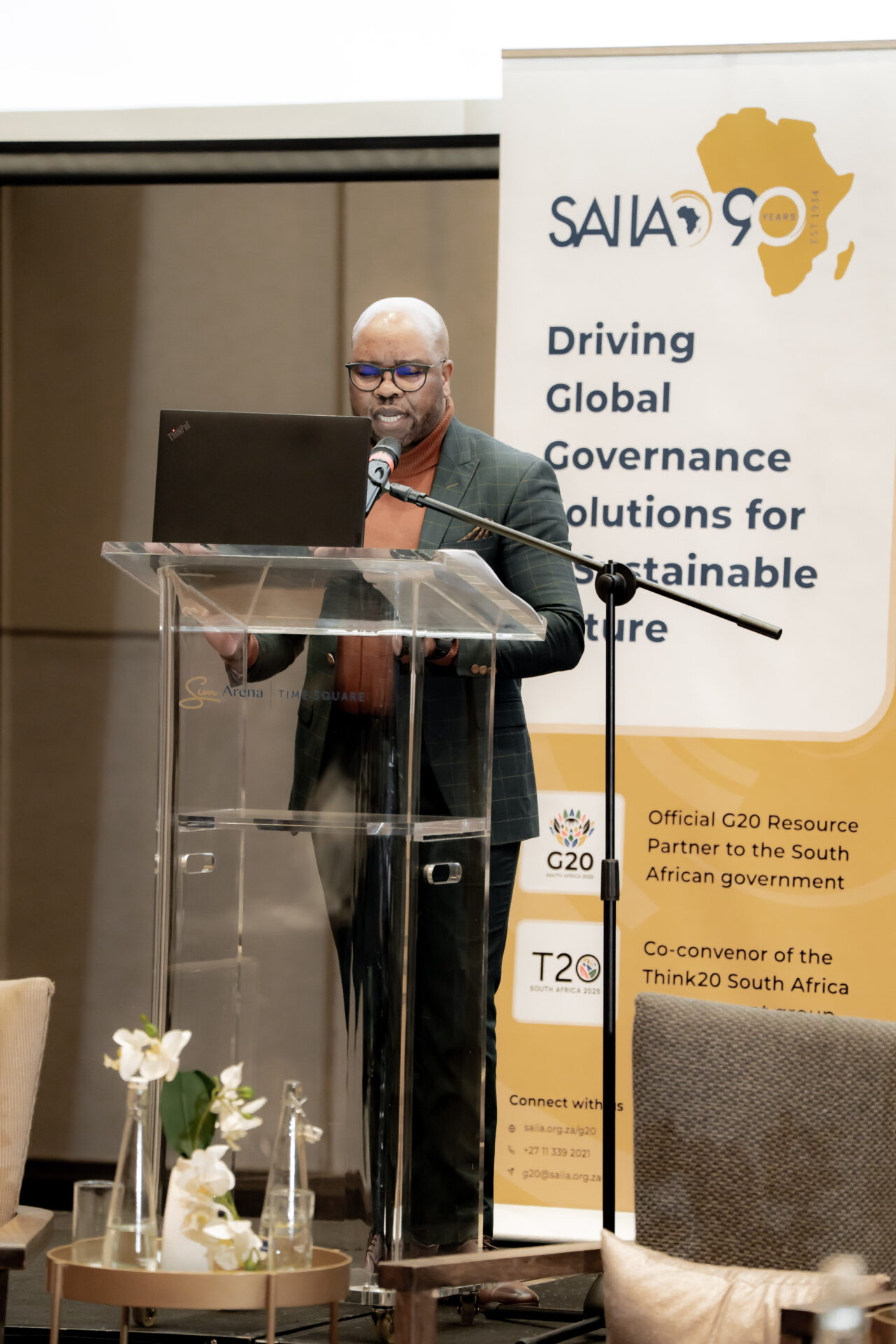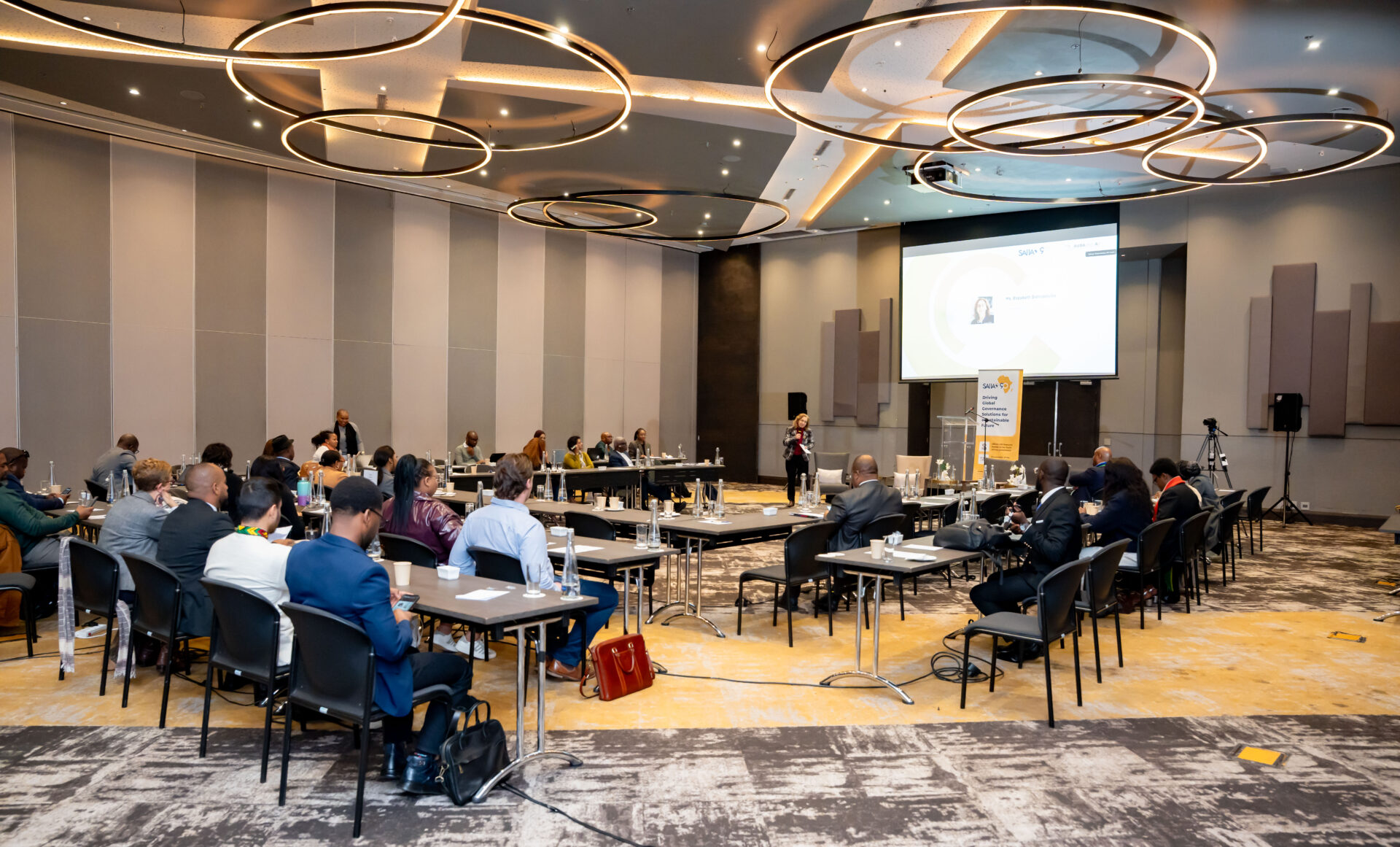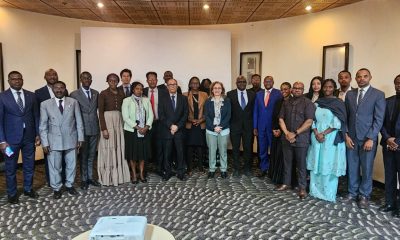

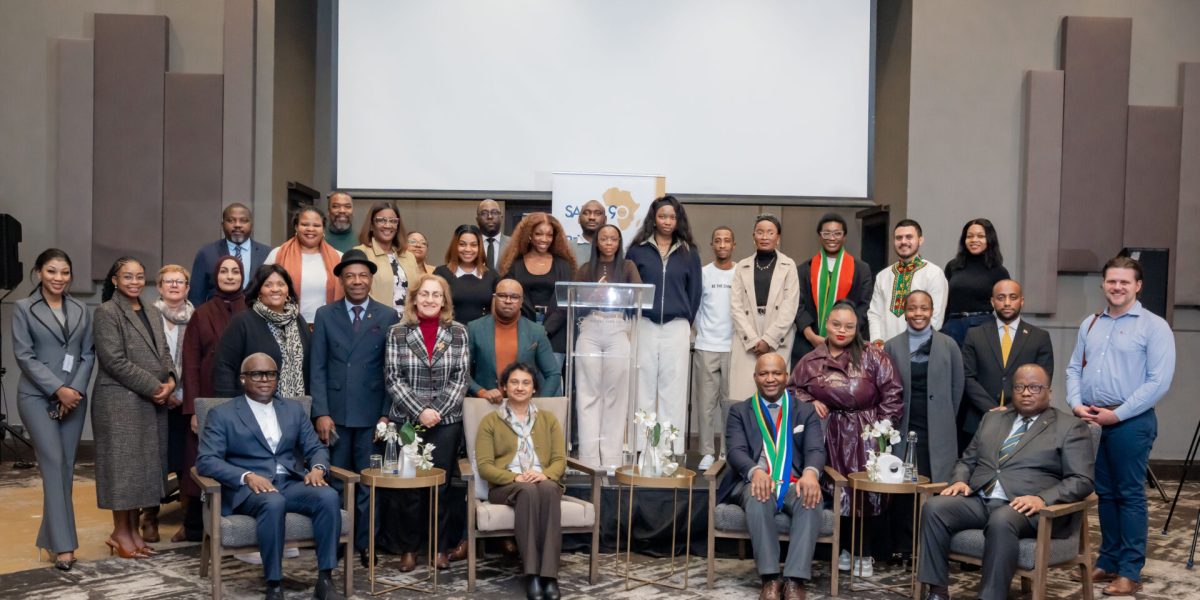
The event brought together African ambassadors and representatives of diplomatic missions, officials from the African Union Commission (AUC), South Africa’s Department of International Relations and Cooperation (DIRCO), civil society organisations, think tanks and international development partners, with participants joining both in person and virtually.
Opened by SAIIA Chief Executive Elizabeth Sidiropoulos and AUDA-NEPAD Senior Economist Prof Bartholomew Kingsly Armah, speakers included:
- Pamla Gopaul, Head Africa Policy Bridge Tank, Economic Analysis and Foresight Unit, AUDA-NEPAD
- Masotsha Mnguni, G20 Project Coordinator, DIRCO
- Dr Ibrahim Assane Mayaki, AU Special Envoy on Food Security, former prime minister and foreign minister of Niger and Former CEO of AUDA-NEPAD
- Dr Arina Muresan, UNISA
- Dr Patrick Olomo, AUC
- Kamal Ramburuth, Institute for Economic Justice
- Dr Richard Ponzio, Stimson Center
- Goodwill Kachingwe, G20 Coordinator, SAIIA
- Dr Joseph Matola, Head: Economic Resilience and Inclusion Programme, SAIIA
The dialogue focused on two interconnected imperatives: taking stock of the outcomes of South Africa’s G20 presidency and charting a forward-looking course for sustaining Africa’s influence post the South African presidency, including through engagement with the current US presidency and across successive presidencies. It was emphasised that the G20 process is not concluded with the leaders’ declaration, but that the real work of driving commitments forward in the G20 and across other multilateral forums, including the International Monetary Fund, World Bank, World Trade Organization and Financing for Development processes, lies ahead.
G20 Project Coordinator Masotsha Mnguni presented a comprehensive account of South Africa’s G20 presidency, noting that the Johannesburg Declaration referenced Africa 52 times, reflecting the most comprehensive acknowledgement of the continent in any G20 declaration to date. He highlighted landmark outcomes, including the adoption of a Critical Minerals Framework, the G20 Africa Expert Panel chaired by former Finance Minister Trevor Manuel, and the establishment of an International Panel on Inequality endorsed by the AU Assembly in February 2026. Participants also reflected on the evolving geopolitical dynamics within the G20 and explored how the AU can continue to champion continental priorities and maintain a strong African voice in instances where South Africa is not represented in specific engagements.
Participants emphasised the need for Africa to reframe its engagement within the G20, shifting from a donor-recipient paradigm to one based on mutual investment and strategic partnership. They highlighted concrete opportunities in areas such as port infrastructure, regional value addition, green hydrogen and the African Continental Free Trade Area (AfCFTA), positioning Africa as an indispensable partner in addressing global challenges and advancing shared prosperity. Participants also reflected on the increasingly fragmented global landscape, noting that the era of broad international consensus is giving way to one characterised by competing interests and geopolitical uncertainty. In this context, they underscored the importance of strengthening continental integration, pursuing Africa’s strategic economic interests and building resilient institutions capable of navigating a more complex and multipolar world.
Dr Olomo presented the Africa Engagement Framework, a medium-term framework for engagement between the G20 Finance Track and Africa, covering the period 2026–2030. The framework is structured around five priority areas: fiscal and macroeconomic stability; institutional governance; infrastructure development and the AfCFTA; reducing the cost of capital; and strengthening the role of international financial institutions in supporting Africa’s development. He noted that the AU G20 coordination mechanism is fully operational and convenes regular meetings with knowledge partners, including the African Development Bank and the UN Economic Commission for Africa. He also reported on the launch of the Borrowers’ Platform in April 2026 and the convening of its inaugural steering committee meeting in May, with Egypt serving in an interim chairing role.
The dialogue concluded with a synthesis of key insights and strategic recommendations emerging from the series of G20 dialogues convened by SAIIA and AUDA-NEPAD in Pretoria, Dakar and Addis Ababa since 2025. Participants emphasised the importance of articulating a focused set of African priorities for engagement with the G20, engaging incoming presidencies – particularly the UK in 2027 – well in advance of their agenda-setting processes, strengthening the role of African ambassadors in G20 host capitals as advocates for continental interests and developing a robust continental knowledge architecture to support coherent and evidence-based policy advocacy.
The event marked the fifth in a series of G20 dialogues led by SAIIA and AUDA-NEPAD, with selected dialogues convened in partnership with organisations such as the UNDP and AfriCatalyst. The series aims to elevate African perspectives in global economic governance and to sustain the momentum generated under South Africa’s historic G20 presidency through continued and coordinated African engagement with future G20 presidencies.
Watch the full recording here.
Resources and Presentations
- Empowering Africa’s Voice Within the G20: Events Outcomes Report
- Presentation by Dr Patrick Olomo
- Opening Remarks by Prof. Bartholomew Armah
- T20 US Knowledge Hub
- SAIIA G20 Resource Centre
Event Gallery