
Respondents in all five countries expect the future international order to centre on multiple plurilateral and regional arrangements.
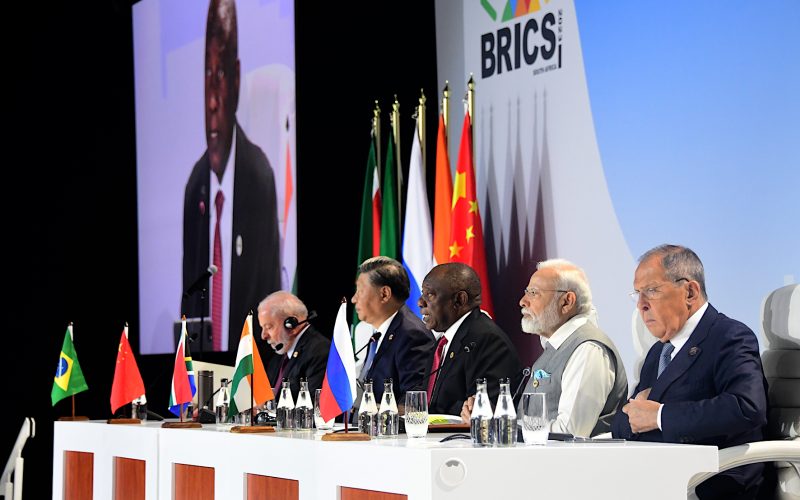
89% of Indonesian respondents consider ASEAN to be the most important international institution for their country, while 74% of South African respondents say this for BRICS. Other regional groups like the AU, EU, Indian Ocean Rim Association and Mercosur are seen as important in filling the gaps left by multilateral gridlock.
Across all five countries, respondents have lost confidence in the possibility of reform at the UN or the World Trade Organization.
On average, 80% also rate the global influence of the US negatively.
Bilateral preferences differ sharply. 90% of Indian respondents rank Russia as their country’s most important bilateral partner, while 83% of Brazilian respondents place China first.
In Germany, 53% of respondents want the country to adopt a “non-aligned” stance, up from 29% in the previous survey.
Respondents in Brazil (79%), India (78%), South Africa (81%), Germany (80%) and Indonesia (86%) anticipate global military conflicts to escalate in the next five years.
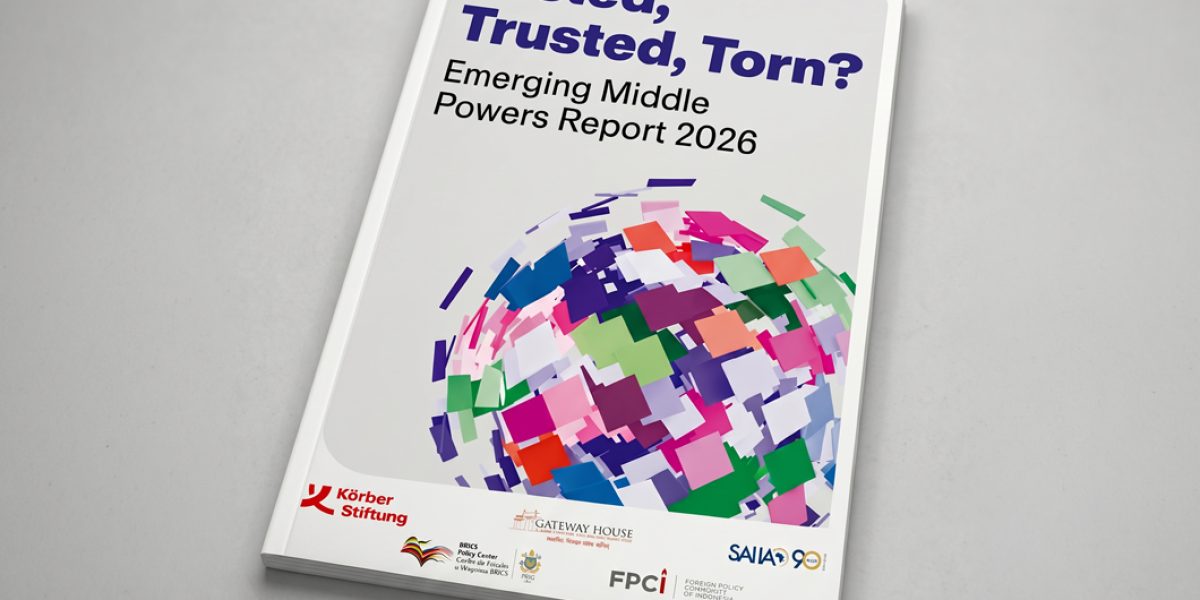
This report is published by Körber-Stiftung and is available here. Through an annual expert survey and dialogue series in cooperation with SAIIA, Gateway House, the BRICS Policy Center and FPCI, the initiative highlights key areas of convergence among these countries.