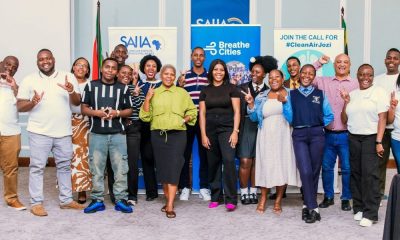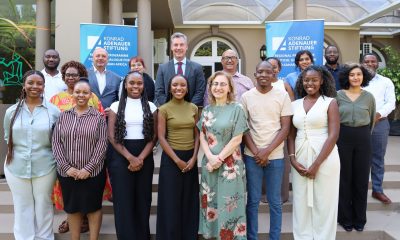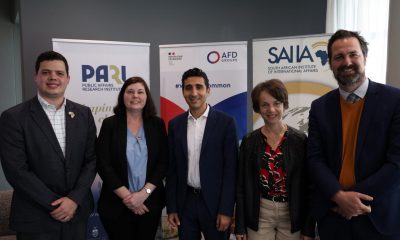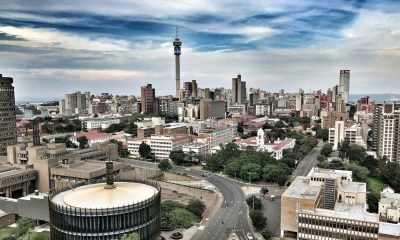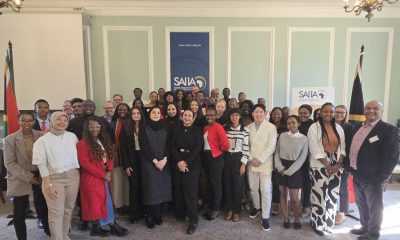
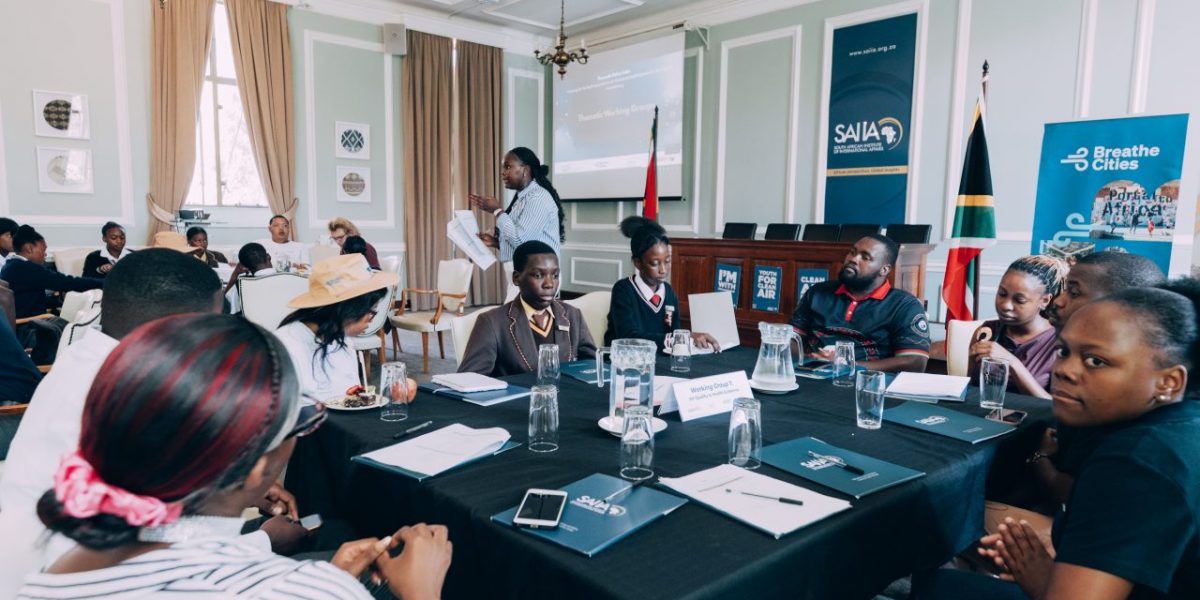
The City of Johannesburg’s Environment and Infrastructure Services Department (EISD), in partnership with Breathe Cities and the Youth Programme (Youth@SAIIA) at SAIIA, hosted the Air Aware Pre-Conference Workshop on Air Pollution Policy and Implementation on 10 February 2025 at SAIIA headquarters in Braamfontein.
The workshop aimed to equip young participants with the knowledge, tools and confidence to engage meaningfully in air quality policy discussions. It also enabled them to gather and communicate credible air quality evidence ahead of the upcoming conference and to co-produce a Youth Statement on air pollution and health impacts in Johannesburg, which will be presented to policymakers. Air Aware: Youth-Led Air Pollution Awareness is a pilot programme funded by Breathe Cities and implemented through Youth@SAIIA. The initiative educates and empowers young people on air quality and its health impacts, positioning them as key stakeholders in driving improved air quality management in the city. The workshop serves as a precursor to the Air Aware: Youth-Led Conference on Air Pollution Policy and Implementation, which will be hosted in Johannesburg on 26 February 2026 at the Wanderers Club.
A key highlight was group engagements where participants contributed written inputs for the Youth Statement. Thematic discussions focused on air quality and health impacts, clean mobility, waste-to-value and no-burn solutions, youth accountability and governance, 2030 clean air futures, and school-level air quality action platforms.
Air pollution remains one of Johannesburg’s most serious environmental and public health challenges, with children and young people in marginalised communities disproportionately affected. The City’s clean air policy presents an opportunity to address these inequalities, but meaningful progress depends on inclusive participation. Workshop participant Paseka Molejane said the engagement was valuable: “These conversations are vital. We have learned more about air pollution and the solutions the City is implementing. Improving air quality requires educating communities and sharing this information widely.”
Youth@SAIIA Project Coordinator and Youth Air Champion, Lehlohonolo Jack, emphasised the importance of youth inclusion in policy platforms, noting that young people contribute lived experiences and future-focused solutions that strengthen decision-making. Musa Mahlatji, Deputy Director for Air Quality Management in the City of Johannesburg, reaffirmed the City’s commitment to inclusive environmental governance. “By creating space for youth voices in air quality management and policy dialogue, we are building a generation that understands the impacts of pollution and is ready to champion cleaner, safer air for everyone.” The City continues to work with partners to place young people at the forefront of sustainable development, environmental resilience and improved public health.
This article was first published on the City of Johannesburg website.