
Nigeria and South Africa should work together

On Sunday 6 April 2014 on the way to the SAIIA offices in Braamfontein I passed many Nigerian churches, which are now permanent features of inner-city Johannesburg. Sermons were already underway and sounded celebratory. I wondered if they were celebrating the announcement of Nigeria being named the continent’s largest economy, usurping South Africa.
Ukraine’s new path blocked by a meddling neighbour

An internal Ukrainian crisis dating back to November 2013 took on an external dimension last month. Just as Ukrainians were starting to rebuild their country after months of protests and a change of leadership, Russia’s intervention in Crimea has shifted the focus, and set off alarm bells throughout Europe.
Ethiopia and BRICS: A Bilateral Trade Analysis

This paper examines the strength, magnitude and direction of bilateral trade between Ethiopia and Brazil, Russia, India, China and South Africa (the BRICS countries) in 1995–2012.
The merits of EU membership for the Crimean Peninsula
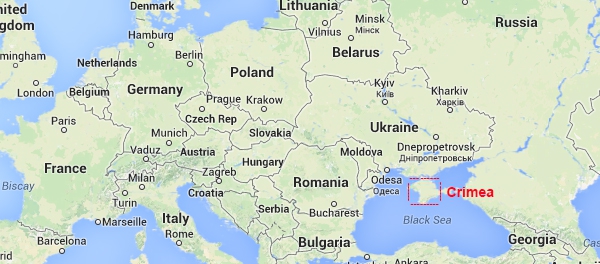
Bulgaria is still the poorest European Union country, but its fortunes have improved exponentially since it joined the EU. This makes the recent events in the Crimean Peninsula unfortunate. By leaving Ukraine, Crimea has missed a window of opportunity to benefit from Ukraine’s closer association with the EU.
SADC’s Trade Agenda at the EU-Africa Summit

Representatives of 54 African and 28 European States, including over 30 heads of state, will meet in Brussels on 2 and 3 April for the fourth EU-Africa Summit. The meeting has a broad-ranging agenda under the title “Investing in People, Prosperity and Peace”.
Mining and Development: Lessons Learnt from South Africa and Beyond

Africa is blessed with an abundance of mineral resources, yet it remains poor by most measures. Recent high growth rates have yet to translate into inclusive development. The continent must harness its mineral wealth to build human capital and industries that allow it to diversify away from commodity concentration.
Does the draft investment bill threaten foreign investors’ rights?

South Africa’s approach to regulating the protection of foreign investments and investors has become controversial. It has centered on the future of bilateral investment treaties (BITs), pitting the European Union (EU) against the South African government.
Crisis in the Crimea: a violation of international law?
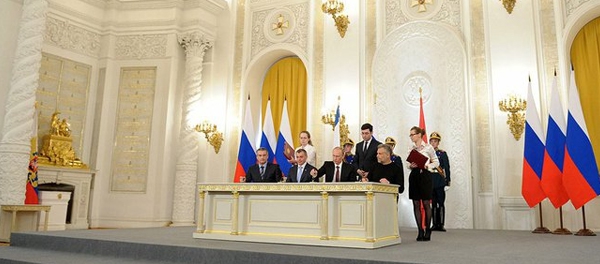
The people of the Crimean peninsula in the Ukraine voted overwhelmingly to join the Russian Federation on 16 March 2014. The following day the Crimea declared its independence from the Ukraine as the Republic of Crimea and the Autonomous City of Sevastopol. And on 18 March 2014 the territories formally joined the Russian Federation through […]
The way forward for the BRICS New Development Bank
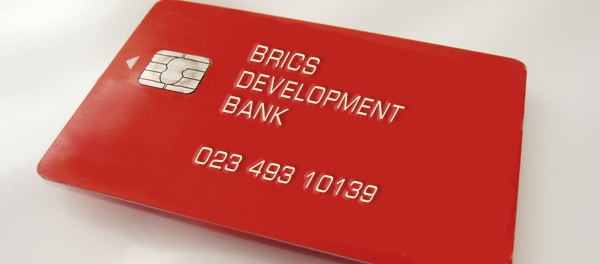
2013 was a difficult year for the five BRICS countries. China and Brazil faced slowing growth, South Africa and India were hit by currency instability, and concern over Russia’s governance deepened (before recent events in the Ukraine pitched them into all-out crisis).
The Evolving Agenda of the BRICS: Perspectives from Brazil and South Africa

As the sixth BRICS head of state summit approaches, it is clear that the grouping’s agenda is far from static.