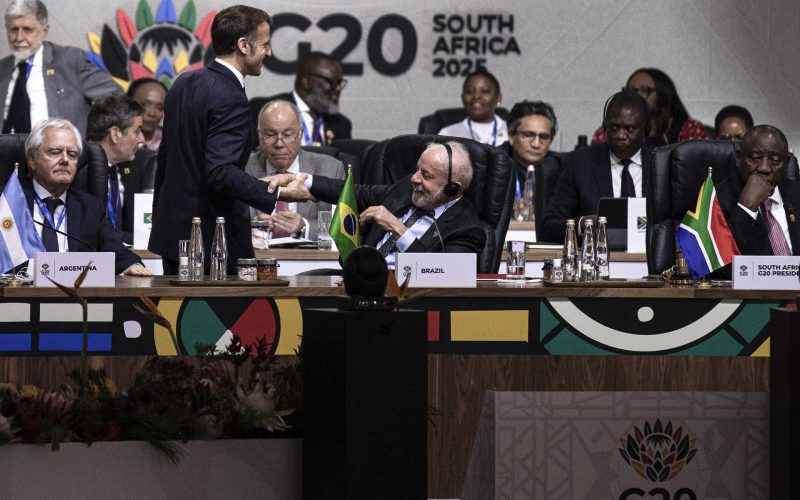
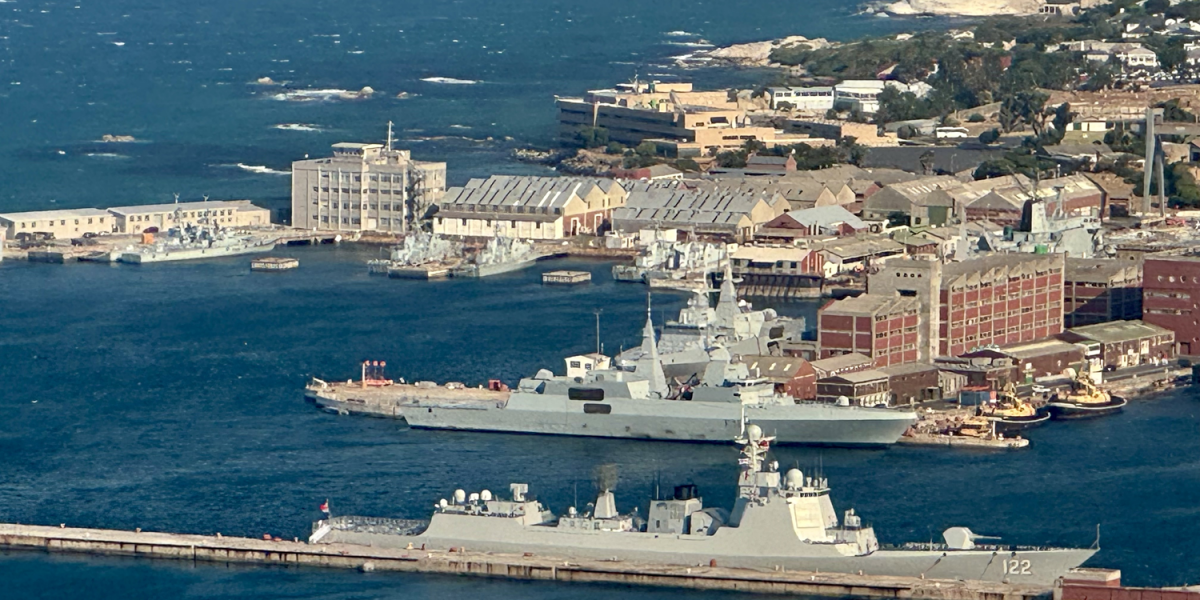
South Africa is often criticised regarding its foreign policy of non-alignment, with some assessing that its behaviour does not reflect a genuinely non-aligned position, especially regarding its relationship with Russia, which has caused tensions with the US. However, South African policymakers argue that Pretoria wishes to see the establishment of a more equitable and multipolar world order, saying this explains its openness to engage with powers that some consider ‘bad actors’. This takes place against the backdrop of the great power contestation that is currently (re)shaping the international system.
The end of the Cold War in 1989 saw the demise of the Soviet Union in 1991 and the replacement of a bipolar system with the unipolar system characterised by American dominance in all areas ranging from economics to diplomacy and military prowess.1Josh Hammer, ‘The End of the Unipolar Moment’, Newsweek, March 11, 2022. Since then, the increasingly globalised world has been organised around the liberal international order (LIO).2John Mearsheimer, ‘Bound to Fail: The Rise and Fall of the Liberal International Order,’ International Security 43, no. 4 (2019): 7-50 Under the leadership of the US, which acts as the global hegemon in the aftermath of the fall of the Berlin Wall, international relations have operated according to a predictability afforded by the rules-based order institutionalised by the US. With the US and much of Western Europe at the apex, political liberalism (i.e., democracy), economic liberalism (i.e., capitalism), and liberal internationalism (underpinned by an abundance of multilateral institutions) have been the order of the day. Beyond being a system of norms and a collection of ideas, the LIO represents the sheer global power and influence of the US. For some time now, however, it has been suggested that America’s hegemony together with its liberal politico-economic orthodoxy may be approaching its end.3Mearsheimer, ‘Bound to Fail’; Daniel Araya, ‘America’s Unipolar Moment Is Over: What Comes Next Is Unclear,’ Centre for International Governance Innovation, July 26, 2023; Christopher Layne, ‘This Time It’s Real: The End of Unipolarity and the Pax Americana’, International Studies Quarterly 56, no. 1 (2012): 203–213
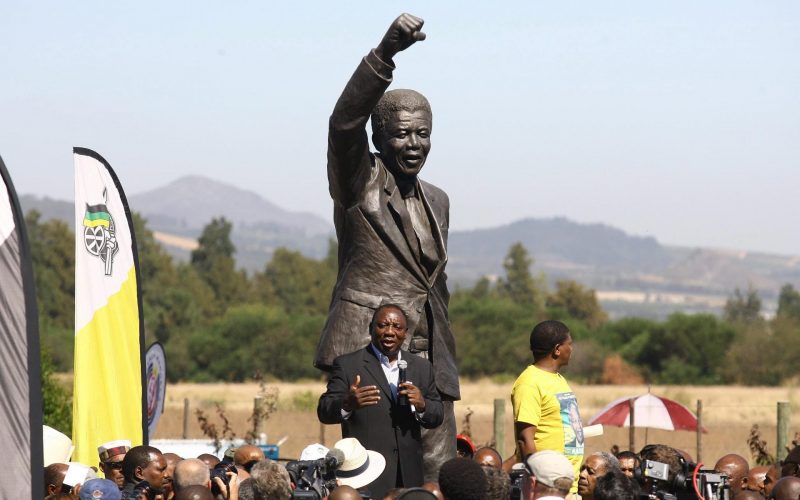
For South Africa, entering the international system as a newly democratic state in 1994, this unipolar international order presented it with a simple prescript to guide its foreign policy: subscribe to those norms or risk exclusion. While South Africa embraced many liberal norms such as valuing human rights, and these shaped both its Constitution and foreign policy under Nelson Mandela,4 Felix Dube, ‘Neither Adopted nor Borrowed: A Critique of the Conception of South Africa’s Bill of Rights’, Potchefstrom Electronic Law Journal 23, no. 1 (2020): 1 – 26; Marcel Nagar, ‘The Art of Reconciling Power and Morality in South African Foreign Policy: South Africa’s Norm Entrepreneurship under Cyril Ramaphosa,’ in South African Foreign Policy Review Volume 4, eds. Lesley Masters, Jo Ansie van Wyk and Philani Mthembu (Pretoria: Human Sciences Research Council Press, 2022). it also sought – and continues to seek – to pursue strategic autonomy. Based on a complex interplay of factors, including its historical context, South Africa has advanced a nuanced approach by balancing global norms with the assertion of its own agenda, rather than simply subscribing to the notion of a unipolar order.
This article appears in a special issue of the South African Journal of International Affairs (Volume 32.4) and is published open access.