Summary
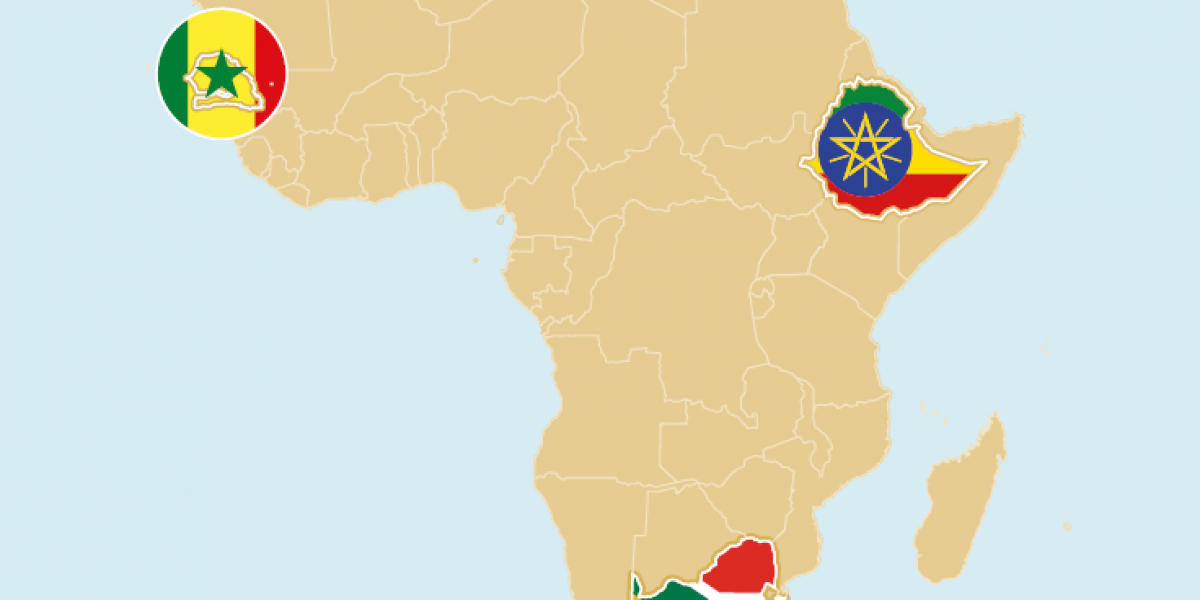
- Acknowledging the limitations of treating Africa as a single actor, this study adopts a plural notion of ‘African agencies’, focusing on state-level agency through a comparative analysis of the foreign policies of Ethiopia, Senegal, and South Africa, following a most-different systems design.
- The analysis examines the different foreign policy approaches of the three countries at the regional and international level, adopting a nuanced distinction between ‘cautiousness’ and ‘assertiveness’. It conceptualises a spectrum of postures ranging from weak or ambiguous non-alignment to clearly articulated and proactive yet cautious strategies, including mediation and diplomatic activism. At the more assertive end, the framework distinguishes between action pursued within recognised international frameworks and forms of highly assertive behaviour that extend beyond established diplomatic, legal or multilateral channels.
- From an international perspective, the foreign policies of the three countries display similarities in their broadly cautious orientation, characterised by non-alignment (for instance, regarding the war in Ukraine), pragmatism, hedging and the diversification of economic partnerships. South Africa, however, partially diverges from this shared pattern through its outspoken stance on the Israeli–Palestinian issue and its comparatively firmer response to tensions with the new Trump administration.
- During the 2017 Gambian political crisis, Senegal – acting through ECOWAS – assumed a leading interventionist role to secure the departure of Yahya Jammeh and the installation of Adama Barrow. Dakar’s actions – under Macky Sall – constituted a clear demonstration of agency and power politics, involving the deployment of hard-power strategies within its immediate regional environment and, at times, reflecting a paternalistic mode of action reminiscent of the former French colonial model. This departure from Senegal’s customary mediator role can be explained primarily by Dakar’s strategic, economic and, above all, internal security interests – particularly related to the Casamance separatist movement. Thus, it can be characterised as assertive, while still operating within a recognised regional and multilateral framework.
- Under President Abiy Ahmed’s administration, Ethiopia’s claim to sea access constitutes the main difference from the regional foreign policy of its predecessors. This shift is driven by the need to divert domestic attention from internal security challenges, the construction of a unifying national narrative, the structural constraints of governing a large, landlocked country and the pursuit of greater geostrategic relevance. These dynamics have translated into a highly assertive posture, most notably reflected in the 2024 MoU with Somaliland and in the post-Tigray rhetorical escalation with Eritrea over the Port of Assab. Both are compounded by longstanding tensions with Egypt over the Grand Ethiopian Renaissance Dam.
- South Africa’s regional foreign policy continues to be characterised by its preference for quiet diplomacy and the image of ‘reluctant hegemon’. Its involvement in the SADC mission in North Kivu – culminating in the loss of South African personnel, the subsequent withdrawal of troops, rising diplomatic tensions between Paul Kagame and Cyril Ramaphosa, and eventual US-led negotiations between the Democratic Republic of Congo and Rwanda – can be read as a foreign policy setback, revealing constraints in military capacity, regional agency and influence, and highlighting an initial approach that fell short of a clearly assertive posture.
- Recognising that the foreign policy actions of the three African states are rooted in fundamental national interests, it becomes clear that – despite divergences between regional and international approaches, whether ‘cautious’ or ‘assertive’ – they ultimately pursue a single objective: the consolidation of strategic autonomy.