
From Rebellion to Rule: Rebel Group Organisation and State-Building in Africa

Image: Getty, Cyrile Ndegeya

Recent research has challenged the assumption that territorial control is a necessary condition for rebel governance, demonstrating that armed groups can exercise governance functions through social networks, mobile authority or service provision in contested areas.

Abstract

This article examines how the wartime organisational structure of rebel groups influences their capacity for effective governance after conflict. It argues that groups with more developed hierarchical structures and ideological cohesion are better positioned to transition into capable political actors in the post-war period. Drawing on literature on rebel governance and state formation theory, the article employs comparative process tracing to analyse the relationship between wartime governance structures and post-conflict state-building. The analysis centres on three African cases with distinct organisational features and governance trajectories: the Somali National Movement (SNM), the de facto government authority in Somaliland; the hierarchically driven Rwandan Patriotic Front (RPF); and Resistência Nacional Moçambicana (RENAMO) in Mozambique, which entered government through a negotiated settlement. The findings suggest that variation in internal organisational coherence and wartime governance experience significantly shape a group’s ability to influence political transitions and post-conflict governance effectiveness.

Introduction

Rebel governance has emerged as a central lens for analysing political transitions in the aftermath of conflict. However, much of the existing literature has concentrated on the causes and drivers of rebel governance such as territorial control,1Zachariah Cherian Mampilly, Rebel Rulers: Insurgent Governance and Civilian Life during War (Cornell University Press, 2011), 1–294. rebel engagement with civilian populations,2Anne Marie Baylouny, “Born violent: Armed political parties and non-state governance in Lebanon’s civil war,” Small Wars & Insurgencies 25, no. 2 (2014): 329 –53; Zachariah Mampilly and Megan A. Stewart, “A Typology of Rebel Political Institutional Arrangements,” Journal of Conflict Resolution 65 no.1 (2021):15–45. and the emergence of wartime institutions,3Ana Arjona, “Wartime Institutions: A Research Agenda,” Journal of Conflict Resolution 58 no. 8 (2014): 1360–89. with relatively little attention paid to its long-term outcomes. Recent scholarship highlights that institutions formed during conflict can shape a variety of post-conflict outcomes, including the rule of law, the type of political regime that emerges, relationships between citizens and the state, and overall social cohesion.4Cyanne E. Loyle et al, “New Directions in Rebel Governance Research,” Perspectives on Politics 21, no.1 (2023): 264–76. For example, where postwar regime types are deeply rooted in wartime rebel governance experience,5Reyko Huang, “Rebel Diplomacy in Civil War,” International Security 40 no. 4 (2016a): 89–126. it is known that existing learning processes can carry over skills and norms from rebel justice systems to post-conflict legal institutions.6Cyanne E. Loyle, “Laws and Order: The Impact of Rebel Governance on Post-Conflict Judiciaries”, presented at the Online Peace Science Colloquium, September 25, 2020. It has also been demonstrated how rebel rule can erode social trust.7Yuichi Kubota, Nonviolent Interference in Civic Life During Civil War: Rebel Service Provision and Postwar Norms of Interpersonal Trustworthiness in Sri Lanka, Security Studies 27, no. 3 (2018): 511–30. Still, many questions remain unanswered, including what the lasting effects of rebel governance are on civilian societies and state institutions.8Loyle et al, “New Directions in Rebel Governance Research”, 271. Furthermore, the ways in which the internal organisation and governance practices of rebel movements shape their capacity to achieve effective governance after conflict ends remain underexplored.

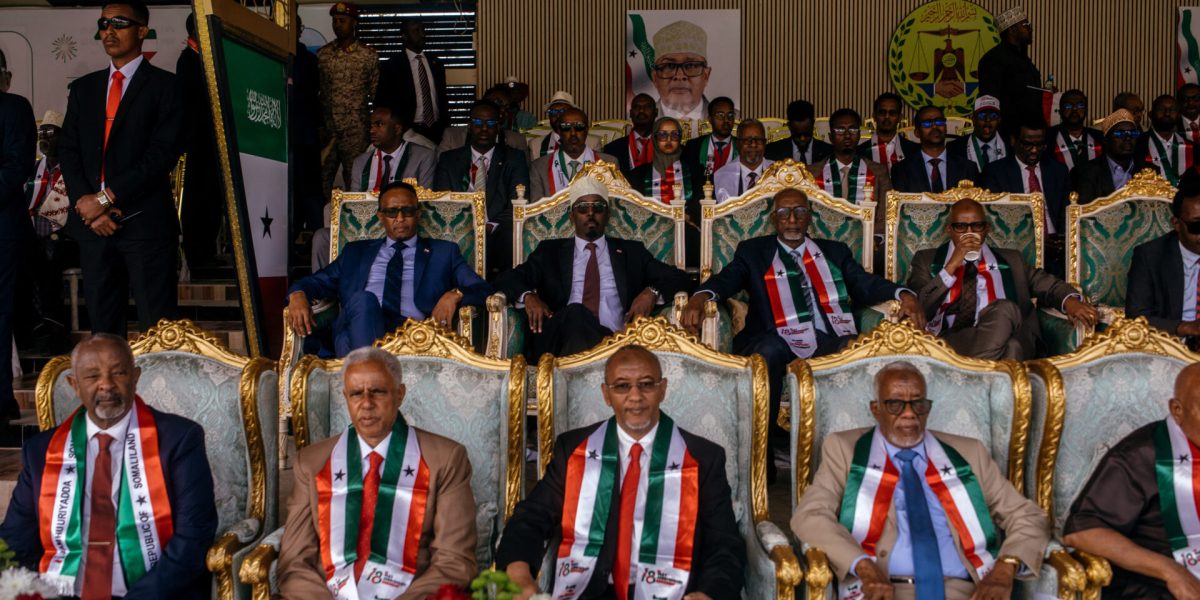
This article seeks to fill this gap by focusing on how the internal organisational structure of rebel groups – particularly the extent of their hierarchical structure and ideological coherence – and their wartime governance practices may influence their ability to transition into effective political governance actors after conflict. The article compares three African cases that illustrate differing organisational structures and divergent post-conflict trajectories: Somaliland, a de facto state governed by clan-based coalitions; Rwanda, where the hierarchical and ideologically driven Rwandan Patriotic Front (RPF) transitioned into a dominant ruling party; and Mozambique, where the ideologically rooted Resistência Nacional Moçambicana (RENAMO) joined a negotiated power-sharing arrangement. Using a comparative process-tracing approach, the article analyses rebel governance both during conflict and throughout the post-conflict transition. Through a comparison of these cases, and by highlighting the importance of organisational coherence and wartime institutional experience, the article offers insights into how rebel movements can either contribute to or undermine governance effectiveness following conflict.

The article is structured as follows. The first section is a review of relevant literature, which outlines key debates on rebel governance with a particular focus on how movements transition from rebellion to political authority, and what this means for broader processes of state formation. The second section provides the theoretical framework, defining the core variables and presenting the central argument. The third section outlines the research methodology, including case selection and the process-tracing approach. The fourth section presents the cases of interest, while the fifth engages in a comparative discussion of the implications for post-conflict governance. The final section concludes by reflecting on the significance of the findings.

Literature Review

Before turning to some of the key debates around rebel governance, the article briefly explains the concept of state-building. State-building is the process of creating or reconstructing governance institutions capable of ensuring citizens’ physical and economic security.9David Chandler, Empire in Denial: The Politics of State-Building (Pluto Press, 2006), 1–240. It is an internally driven process aimed at strengthening the state’s capacity, institutions and legitimacy through state–society relations. Effective state-building rests on a reciprocal relationship between a state that delivers services to its people and the social and political groups that engage constructively with it.10OECD-DAC, “State Building in situations of fragility”. It is therefore closely tied to the political processes through which power and relationships between state authorities and organised societal groups are negotiated and managed. When these actors can identify shared interests and agree on arrangements to pursue them, the process can form the foundation for enhanced state capacity and legitimacy.11OECD-DAC, “State Building”, 2–3. In this article, state-building is understood as a continuous state reconstruction endeavour, closely linked with governance, including rebel governance and its legacy post-conflict.

Broadly, rebel governance refers to the organisation of civilians for a public purpose by non-state actors who militarily oppose the state.12Nelson Kasfir, “Rebel governance—Constructing a field of inquiry: Definitions, scope, patterns, order, causes,” in Ana Arjona, Nelson Kasfir, and Zachariah Mampilly, eds, Rebel governance in civil war (New York: Cambridge University Press, 2015), 21–46. For the purposes of this article rebel governance is understood as the establishment of institutionalised authority by armed actors operating in opposition to (or in competition with) the existing state, administering the public realm in rebel-held territories. Three key scope conditions for rebel governance are territorial control, the presence of a resident population, and the use or threat of violence. Insurgent groups that establish governance structures often organise civilian participation, administer public affairs or oversee the production of economic resources. In some cases, these governance practices give rise to a rebel political order which is understood as a system of institutionalised governance and social regulation established by armed groups in the territories they control.13Kasfir, “New Directions”, 21. These practices are not only functional but also political, as they seek to establish legitimacy and regulate social relations outside the state’s authority. In this article the terms ‘insurgent group’ and ‘rebel group’ are used interchangeably to refer to non-state armed actors that oppose the incumbent state.

Recent scholarship, however, has challenged the assumption that territorial control is a necessary condition for rebel governance, demonstrating that armed groups can exercise governance functions through social networks, mobile authority or service provision in contested areas.14Mampilly and Stewart, “A typology”; Ana Arjona, Rebelocracy: Social Order in the Colombian Civil War (Cambridge: Cambridge University Press, 2016), 1–408 While acknowledging this debate, this article focuses on cases in which rebel groups exercised some territorial control during conflict, as territorial control can provide conditions under which wartime governance can be institutionally developed. For instance, territorial control can enable groups to establish administrative structures, extract resources through taxation, deliver services and cultivate legitimacy among resident populations. The use or threat of violence (as a scope condition) serves to distinguish rebel groups from non-violent political movements and civic organisations that may also engage in governance activities, but do so without turning to armed force. The violence in question is primarily directed at the state, as armed challenge to state authority is a defining feature of rebellion. However, as the case studies demonstrate, the degree and nature of violence directed at civilians varies across rebel groups and these variations carry implications for governance legitimacy during and after conflict.

While early research has mainly focused on the strategic or coercive motivations behind rebel governance, often linking it to resource mobilisation or civilian compliance,15Jeremy M. Weinstein, Inside Rebellion: The Politics of Insurgent Violence. of Cambridge Studies in Comparative Politics (Cambridge: Cambridge University Press, 2006), 1–406; Stathis N. Kalyvas, The Logic of Violence in Civil War of Cambridge Studies in Comparative Politics (Cambridge: Cambridge University Press, 2006), 1–488. more recent work has turned towards understanding rebel groups as proto-state actors with long-term political aspirations.16Reyko Huang, The Wartime Origins of Democratization: Civil War, Rebel Governance, and Political Regimes. of Problems of International Politics (Cambridge: Cambridge University Press, 2016) 1–229.

Other scholars have highlighted that choices made by armed groups with regards to institution building in wartime have implications for state-building trajectories in the post-conflict period,17Patricia Justino, “Wartime governance and state-building trajectories in post-conflict societies” (No. 2022/48). WIDER Working Paper. and theorised that it is social control during war that matters for understanding post-war state-building, control and stability.18Shelley X. Liu, Governing after war: Rebel victories and post-war statebuilding (New York: Oxford University Press, 2024), 1–352. This shift in the rebel governance scholarship has broadened the analytical lens, moving beyond short-term battlefield dynamics to considering the institutional and ideational legacies of rebel rule.

A growing body of literature has looked at how the internal organisation of rebel groups shapes their governance capacity. Groups with hierarchical command structures, bureaucratic coherence and ideological discipline are often better able to institutionalise governance practices and maintain internal control.19Paul Staniland, Networks of Rebellion: Explaining Insurgent Cohesion and Collapse (Cornell University Press, 2014), 1–300; Nicholai Hart Lidow, Violent Order: Understanding Rebel Governance through Liberia’s Civil War (Cambridge: Cambridge University Press, 2016), 1–275.

These groups tend to mirror state-like behaviours, such as taxation, legal adjudication and service provision, which are features that may facilitate their transition into formal political actors after conflict. For instance, Reyko Huang shows that the way rebel groups interact with civilian populations during war has lasting consequences for post-conflict political regimes. She argues that extensive rebel–civilian engagement during conflict can catalyse bottom-up pressure for democratisation.20Huang, The Wartime Origins of Democratization Although her focus is on regime type, her main insight that wartime governance creates institutional and social legacies underpins this article’s framework. Sherry Zaks extends this organisational logic by examining to what extent wartime structures determine whether rebel groups successfully transform into political parties, demonstrating that groups with governance wings, political-messaging structures and capacity for service delivery during conflict are better positioned for post-conflict political adaptation.21Sherry Zaks, Resilience beyond Rebellion: How Today’s Rebels Become Tomorrow’s Parties (Ithaca: Cornell University Press, 2025). Sarah Zukerman Daly also highlights how the legacies of violence shape post-conflict political order, showing that organisational characteristics of armed groups influence remilitarisation trajectories and that wartime belligerents can leverage their capacity for violence as a foundation for post-conflict electoral success.22Sarah Zukerman Daly, Organized Violence after Civil War: The Geography of Recruitment in Latin America, Cambridge Studies in Comparative Politics (Cambridge: Cambridge University Press, 2016); Sarah Zukerman Daly, Violent Victors: Why Bloodstained Parties Win Postwar Elections (Princeton: Princeton University Press, 2022). On the other hand, loosely organised or ethnically fragmented groups often struggle to centralise authority or implement consistent governance strategies. Their lack of internal coherence may result in fragmented authority, rent-seeking, or violent competition between sub-commanders.23Fotini Christia, Alliance Formation in Civil Wars (Cambridge: Cambridge University Press, 2012), 1–343. As such, their post-conflict political participation may be limited or destabilising, particularly in contexts requiring integration and institution-building.

Recent scholarship has further nuanced the understanding of rebel–civilian relations by foregrounding civilian agency. Oliver Kaplan demonstrates that communities with strong collective action capacity can resist, negotiate or shape the terms of rebel governance, suggesting that governance legitimacy is not only a function of rebel group choices but is co-produced through interactions with local populations.24Oliver Kaplan, Resisting War: How Communities Protect Themselves (Cambridge: Cambridge University Press, 2017). This insight is particularly relevant for understanding the Somali National Movement’s (SNM) experience in Somaliland, where its capacity for clan-based collective action shaped the relationship with local populations. More broadly, scholars have called attention to the socio-political orders that emerge in conflict settings, highlighting how armed groups, civilians and other actors co-constitute governance arrangements that do not map neatly onto state/non-state or formal/informal binaries.25Paul Staniland, “States, Insurgents, and Wartime Political Orders,” Perspectives on Politics 10, no. 2 (2012): 243–264; James Worrall, “(Re-)Emergent Orders: Understanding the Negotiation(s) of Rebel Governance.” Small Wars & Insurgencies 28, no. 4–5 (2017): 709–33.

A related body of knowledge examines the rebel-to-party scholarship, focusing on how armed groups transform into electoral competitors after conflict. Zaks weighs in on this,26Zaks, Resilience beyond Rebellion. and John Ishiyama and Anna Batta analyse the organisational dynamics of this transformation, while Ishiyama and Michael Widmeier find that wartime bureaucratic development is a significant indicator of post-conflict electoral success.27John Ishiyama and Anna Batta, “Swords into Plowshares: The Organizational Transformation of Rebel Groups into Political Parties,” Communist and Post-Communist Studies 44, no. 2 (2011): 369–379; John Ishiyama and Michael Widmeier, “From ‘bush bureaucracies’ to electoral competition: what explains the political success of rebel parties after civil wars?” Journal of Elections, Public Opinion and Parties 30, no. 1 (2020): 42–63. Devon Curtis and Gyda Sindre examine how armed movements’ vision of the state evolve through this transformation, and Carrie Manning documents the challenges RENAMO faced in its transition from armed movement to political party.28Devon Curtis and Gyda M. Sindre, “Transforming State Visions: Ideology and Ideas in Armed Groups Turned Political Parties,” Government and Opposition 54, no. 3 (2019): 387–410; Carrie Manning, “Constructing Opposition in Mozambique: Renamo as Political Party,” Journal of Southern African Studies 24, no.1 (1998): 161–189. While these studies provide valuable insight into electoral participation and party development, this article goes beyond party transformation to examine the broader governance implications of wartime organisation, of which successful party development is one possible – but not exclusive – outcome.

Although the scholarship on rebel governance has grown significantly, relatively little is known about the long-term consequences of various forms of rebel governance for post-conflict political order. Some scholars argue that wartime institutions can be repurposed in peacetime, providing continuity and administrative experience that supports post-conflict reconstruction.29Ana Arjona, Rebelocracy; Dipali Mukhopadhyay, Warlords, Strongman Governors, and the State in Afghanistan (Cambridge: Cambridge University Press, 2014), 1–374. However, others caution that such legacies may entrench authoritarian practices or exclusionary ideologies, especially when governance is rooted in coercion or narrow identity politics.30Arjona, Kasfir and Mampilly, Rebel Governance in Civil War; Alex De Waal, The Real Politics of the Horn of Africa: Money, War and the Business of Power (Polity, 2015). The link between rebel governance and (post-conflict) state-building remains under-theorised, particularly in the African context where diverse political trajectories emerge from similar conflict environments. Questions remain about which rebel characteristics matter most for shaping political transitions, whether it is ideological cohesion, military discipline, or institutional structures developed during war.

This article adds to ongoing debates by emphasising how organisational structure influences the outcomes of transitions from rebellion to statehood. It aligns with recent scholarship that views civil war not as an isolated episode but as a social process whose dynamics connect pre-war, wartime and post-war periods through evolving interactions between state and non-state actors.31Anastasia Shesterinina, “Civil war as a social process: actors and dynamics from pre- to post-war,” European Journal of International Relations 28, no. 3 (2022): 538–562 It moves beyond viewing rebel governance as merely a wartime occurrence, instead framing rebel institutions as part of a wider, continuous process of state formation. By comparing cases with divergent organisational features and post-conflict trajectories, this study offers empirical insight into how internal rebel dynamics condition state-building processes after conflict.

Read the full article on the Taylor & Francis website.

The views expressed in this publication/article are those of the author/s and do not necessarily reflect the views of the South African Institute of International Affairs (SAIIA).

This content features on the G20 Resource Centre.