
South Africa commemorates three significant anniversaries this year: on 27 April, the country marked 32 years of democracy; on 16 June, 50 years would have passed since the Soweto student uprising of 1976; and on 10 December, the country will celebrate 30 years since the signing of the Constitution in 1996, lauded as one of the most progressive in the world.
Together, the events speak of the tremendous cost at which freedom was won in South Africa. Without youth sacrifice, democratic governance and a constitution that enshrines equality for all would not have been possible.
Yet 50 years after one of the most pivotal moments in the country’s history, the reality is that hard-won political freedom has not translated into economic liberty for the youth. One system of oppression has been replaced by another, leaving today’s youth feeling excluded and without a future.
The adversary that youth face today has shifted from political oppression to economic exclusion. The triple challenges of inequality, poverty and unemployment strain South Africa’s budding global soft power and democratic gains.
Of the three challenges, unemployment is arguably the worst, since it also contributes to deepening inequality and poverty. In May, Statistics South Africa (Stats SA) released its Quarterly Labour Force Survey (QLFS) for the first quarter (Q1) of 2026. It does not paint a hopeful picture.
Closing at 31.4% in 2025, the unemployment rate rose to 32.7% in Q1 of 2026. Persons aged 15 to 64 are considered of working age in South Africa, a group 42.2 million strong. Of these, 24.9 million are considered part of the labour force, of which 8.1 million are unemployed. A total of 17.3 million people are outside the labour force, with discouraged job seekers making up 3.9 million of a potential labour force of 4.9 million.
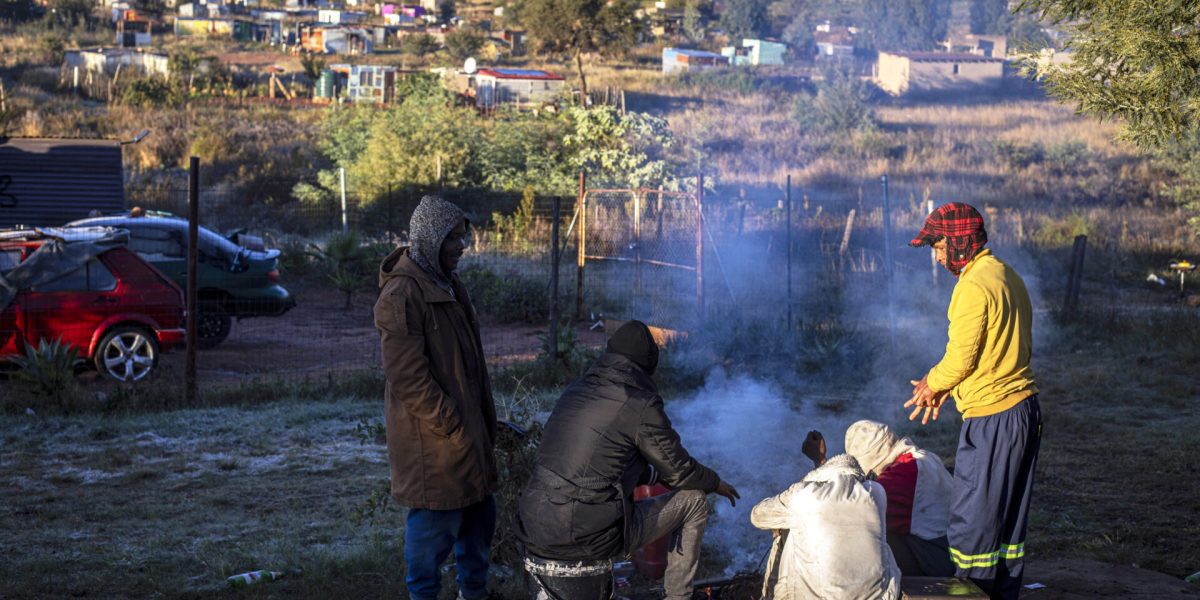
Buried within the figures are concerning demographic data. The unemployment rate among young people aged 15 to 34 is worryingly high at 45.8%. Of a youth labour force of 10.3 million, 4.7 million are unemployed. A further 10.6 million youth are outside the labour force, with discouraged youth job seekers comprising 2 million of the 2.6 million potential labour force.
While the unemployment rate increased, Stats SA noted a decline in poverty levels from 46.7% in 2015 to 37.9% in 2023. This translates, however, to 23 million people living in poverty – a concerning statistic, not a cause for celebration.
Stats SA reports that in 2023, 43.1% of the country’s poor were children aged 0 to 17 years. While poverty levels are known to decline for those aged 18 to 54, the high national poverty rate and high youth unemployment rate point to a generation effectively locked out of the economy.
Little has changed in terms of measured inequality either. The country is regarded as the most unequal in the world. South Africa’s richest 10% possess 86% of the country’s total wealth, an indication that much of the injustice that previous generations fought against persists today.
Overcoming the barriers of poverty and unemployment becomes even more challenging for youth in such an unequal economic environment. Successive governments have failed to address wealth disparities, falling short in bridging the income-wealth gap, meaningfully restructuring the economy and finding ways to address unemployment. It remains to be seen how the national coalition government will fare at this.
A meaningful turnaround will require more than just improved economic governance. Economic inequality is exacerbated in other areas where state services are failing. For example, more than four million South Africans live without legal identification because of seemingly innocent issues like administrative errors and more serious concerns like births not being registered, which prevents such persons from obtaining legal identification documents later in life. This has real consequences for those seeking jobs or financial services or needing to access state welfare services to survive.
The progress of South Africa’s young but resilient democracy cannot be denied. This has included improved representation, transformative legislation and a notable G20 presidency in 2025 that was a testament to the country’s maturing position as an increasingly visible middle power.
But while the country might project strength on the international front, at home, it is brittle. While it put inequality on the global agenda in 2025, at home, South Africa wrestles with addressing domestic inequality.
In April this year, President Cyril Ramaphosa spoke at the Global Inequality Dialogue at the University of the Witwatersrand, highlighting a finding from the Extraordinary Committee of Independent Experts on Global Inequality formed under South Africa’s G20 presidency that ‘inequality is a threat to democratic freedoms, to economic growth and to general well-being’. Democratic freedoms alone do not mean much if, through those freedoms, democracy does not also deliver on its socio-economic promises.
Now, more than ever, as inequality can create conditions for instability and conflict, such as protest delivery strikes and protests and rising crime levels, an urgent grassroots recalibration of economic freedom that targets the triple challenges is needed.
Frustrated by the lack of meaningful socio-economic change, many youth voters are opting out of voting, essentially disengaging in politics. In stark contrast to the active resistance of their predecessors in the local government elections in 2021, less than 20% of 18- to 35-year-olds were registered to vote.
One is always free to choose in a democracy but the decision not to exercise rights that were so bitterly fought for sends a strong message. Independence must not be mistaken for freedom. When the ballot no longer delivers on bringing economic liberation, it stops being seen as a viable route to reach it. And until they are also economically liberated, South Africa’s youth will keep chasing freedom.
This article was first published in the Mail & Guardian.