

L’Afrique Du Sud Et La RDC : Évaluation D’un Partenariat Sud–Sud Au Service De La Paix, De La Gouvernance Et Du Développement

« l’essor du sud » et le rôle joué par les « puissances émergentes » dans le développement mondial sont des thèmes qui ont animé une part importante des discours politiques et économiques depuis une décennie.
Re-thinking the Application of Sustainable Use Policies for African Elephants in a Changed World

Despite increasing calls to recognise the intrinsic value of biodiversity, the need to incentivise people to choose conservation as a competitive form of land use through a sustainable use (SU) approach remains the de facto and de jure reality across most of Africa today.
What is CITES and why should we care?
![Photo © [L-R] Philip Bouchard, Massmo Relsig, Patrik Nygren, Joel Tonyan/ Flick](https://saiia.org.za/wp-content/uploads/2016/09/0236fe4ffb3bfc43e63cb946c008ba7d.jpg)
The Convention on International Trade in Endangered Species of Wild Fauna and Flora (CITES) is an international regulatory treaty between 182 member states. It was formed in 1973 and regulates the international trade in over 35,000 wild species of plants and animals.
A Tale of Two Summits
The 11th G-20 Summit in Hangzhou, China closed earlier this week, focusing on the ‘New’ Industrial Revolution and technological changes, such as big data, robotics, and cloud computing. Innovation has been China’s key area of interest throughout their G-20 Presidency, dedicating many discussions to how new industries could invigorate the global economy.
The State Of Community-Based Natural Resource Management in Southern Africa

Since the 1990s the development–conservation paradigm in the Southern African region has shifted from an approach that emphasised centralised management and wildlife protection, to one that better incorporates socio-economic development and promotes inclusive management and sustainable livelihood strategies.
The rise of sustainable FDI: Emerging trends in the SADC region

The international investment landscape has been shifting over the past two decades. Governments are increasingly realising the potential for Foreign Direct Investment (FDI) to achieve not only economic growth, but developmental objectives as well.
African Peer Review: Removing Itself from a Rut?
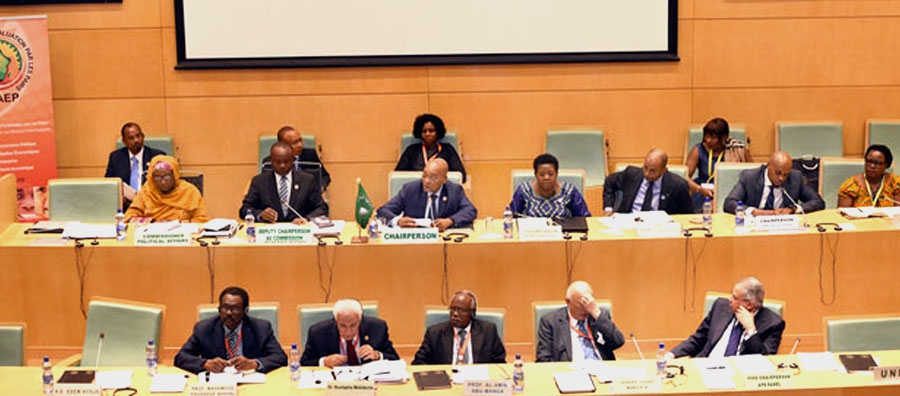
The African Peer Review Mechanism – the continent’s home-grown governance assessment and promotion tool – seems to be slowly turning its fortunes around. On 6-7 September, it will hold a workshop in Sandton discussing how to implement its first ever five year strategy for 2016-2020.
Speaking to development and growth: The G20 summit in Hangzhou

As the full extent of the potential for the world to enter into a Great Depression became clearer in 2008, the G20 Finance meeting was elevated to a Leaders 20, a point that had for some years been advocated by former Canadian prime minister, Paul Martin, among others.
CITES Alone Cannot Combat Illegal Wildlife Trade

The Convention on International Trade in Endangered Species of Wild Fauna and Flora (CITES) will address the growing threat from illegal trade at its forthcoming Conference of the Parties (CoP17).
The 2016 World Conservation Congress: Exploring a Win–Win Agenda for People and the Planet

The World Conservation Congress (WCC), one of the world’s largest environmental gatherings, is convened every four years under the auspices of the International Union for Conservation of Nature (IUCN) to find collaborative solutions to conserve global biodiversity and ecosystems, and harness the solutions nature offers to global development challenges.