

Not Beating Around the Bush: Understanding China and South Africa’s Illegal Wildlife Trade

The illegal wildlife trade is emblematic of the underlying complexities that exist in bilateral relations.
Will competitive elections lead to change in Tanzania?
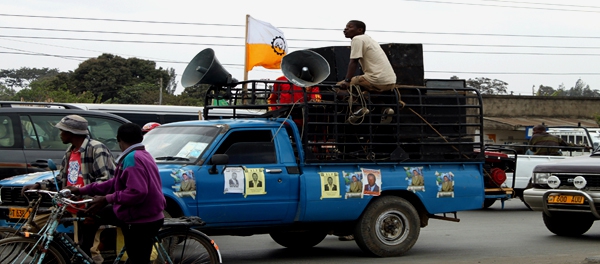
‘Change’ was the word de jour as citizens headed to the polls for the fifth multi-party elections in Tanzania on 25 October 2015.
Will the APRM make for better Ugandan elections?
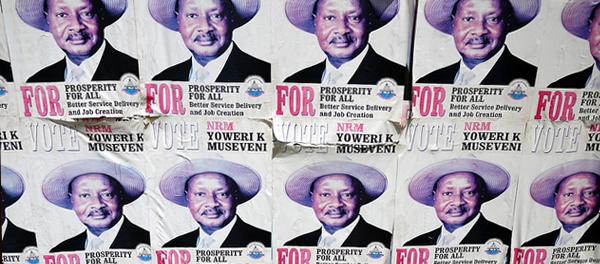
In February 2016, Uganda will go to the polls. It is only the country’s third election held since the constitutional restoration of multi-party democracy in 2005 and it is widely expected to be one of the most contentious. How might Uganda’s participation in the African Peer Review Mechanism (APRM) contribute to better elections?
What South Africa should get out of its engagements in the DRC

President Jacob Zuma’s visit to the Democratic Republic of Congo on 16 October 2015 came at a critical time in the bilateral relations of the two countries, with South Africa having made significant investments in the DRC’s political process since the late 1990s.
Presidential elections in Cote d’Ivoire critical to consolidate political and economic development

After relatively peaceful elections in Guinea-Conakry returned outgoing President Alpha Conde to power last week in the first round of voting, another West African country – Côte d’Ivoire – is heading to watershed presidential elections on 25 October 2015.
Economic realities and the #FeesMustFall movement: Colliding worlds or space for engagement?

21 October 2015 started out as the day that business and economic analysts were expected to reflect closely on the state of the South African economy. Instead it ended up reminiscent of a scene that sci-fi aficionados could describe as stormtroopers defending the Galactic Empire against a small, unarmed rebel alliance.
Universal health care is a tall order given southern Africa’s poor finances

Creating universal health care – one of the targets under the newly ratified Sustainable Development Goals – will have different challenges for each country depending on their economic strength, relationships with donors, and their government’s investment into the health sector.
African unity will remain illusionary without values

‘African unity’ has been one of the most consistent themes in African political thought. Since independence, the vision of a continental order stretching from Cape Town to Cairo and from Dakar to Dar es Salaam has been an entrancing one. Africa, rather than being a geographical descriptor, would be a geopolitical identity.
Aligning Sustainable Development Goals with climate-resilient growth

In December 2015 the UN will host the 21st annual Conference of Parties (COP 21) negotiations to achieve universal commitment to an ambitious, legally binding agreement on climate change.
Moving Beyond Africa’s Crisis of Institutions

This paper explains the dysfunctional state of African institutions and suggests possible interventions for effective and resilient institutions at the national, regional and continental level. It argues that institutional failure in Africa can be diagnosed at the conceptual and operational level.