
Introduction
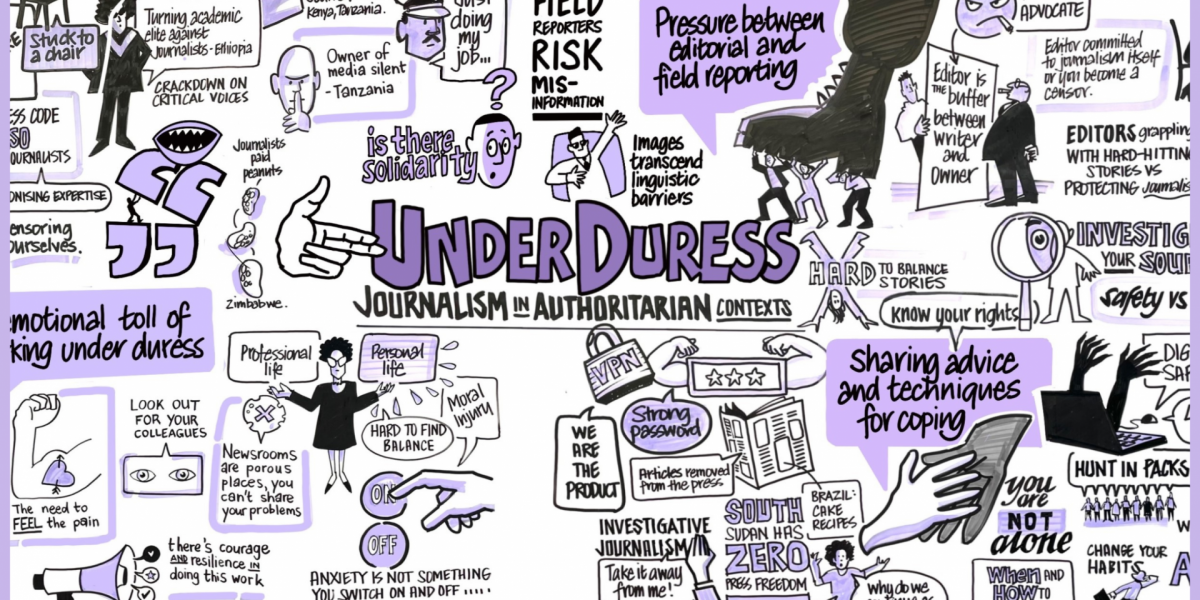
Journalism in Africa – as in many other parts of the world – is coming under growing pressure as governments become increasingly authoritarian and unwilling to tolerate the profession acting as a robust watchdog over state power. In some cases, this takes the form of physical risk and the deliberate targeting of journalists trying to report on violence and conflict. In others, reporters find themselves subject to subtler pressures in the form of greater economic precarity, the treatment of journalism as a matter of national security, declining donor support and pressure to engage in softer, more ‘developmental’ forms of journalism. Despite regional and country differences, there are often common underlying structures in the challenges journalists face across the continent. As a consequence, much can be learned from colleagues who have found different ways to continue holding power to account despite often intense pressure.
This summary report is the outcome of a multi-day roundtable discussion attended by 42 journalists, scholars and civil society representatives, including 17 practising investigative reporters from seven African countries facing severe levels of media intimidation. The contexts in which the journalist participants worked ranged from situations of war and open conflict to subtler forms of relatively peaceful democratic backsliding, and their experiences ranged from field reporting to senior editorial roles in major African newsrooms. Some worked inside the countries they reported on, while others reported from exile or moved between these roles. The roundtable discussions in which attendees participated centred on four major themes: the nature of intimidation and other pressures faced by the profession; how these pressures manifested across different roles in newsrooms; the emotional and psychological effects of working under ongoing pressure; and the strategies adopted by journalists in response to these.
Participants were selected in consultation with researchers, African investigative reporters and civil society organisations working on media freedom issues. This was aimed at ensuring that they were well placed to speak to the realities of working in authoritarian contexts and that participants could be trusted to maintain the confidentiality of the proceedings. To ensure the safety of the journalist participants, many of whom work in situations of genuine physical risk, the date and location of the event, as well as the list of participants, were deliberately kept secret. No recordings of the discussions were made, but the authors of this report took live notes during the proceedings, in accordance with the Chatham House Rule, under which what was said could be reported but no identifying information about the speakers would be revealed. The release of this report has also been timed to take place considerably later than the roundtable event, as a further precaution against the identification of any participants. While these precautions may seem paranoid, some of the difficulties encountered by participants in attending the roundtable made it clear that, in at least some cases, these precautions were necessary to ensure a space where they could speak candidly about the challenges they faced. While some example cases described by participants are recounted in this report, they are done so in deliberately decontextualised ways to preserve the insights they provide without identifying the country contexts or, indirectly, the speakers.