
Recommendations
- Data transparency: African nations must prioritise producing and disseminating audited, reliable fiscal data. Coordination between finance ministries and central banks is essential to provide consistent statistics that allow for accurate assessments of macroeconomic conditions and fiscal vulnerabilities.
- Capacity building: Empower debt management offices with specialised training to master credit-rating processes and models. Leveraging regional peer learning and partnerships with the IMF and AfDB will help officials to craft more effective ‘credit pitches’.
- Legislative oversight: Political will must be solidified through debt sustainability laws, such as debt ceilings. The executive branch should lead implementation by ensuring regular fiscal audits are presented to the legislature for rigorous oversight.
- Macroeconomic stability: Prudent management – focusing on stable monetary policy and reasonable fiscal deficits – remains vital. Governments should aggressively publicise reform milestones and up-to-date forecasts to challenge fiscal improvements overlooked by rating analysts.
Executive summary
This policy brief addresses the impact of credit rating agencies’ (CRAs) ratings on development in Africa, with a particular focus on the adequacy of the methodologies of CRAs and the risk premium of African countries. It also offers recommendations for addressing the high risk premiums faced by African countries and negative CRA ratings. These recommendations are based on the ongoing work aimed at structuring and establishing an African CRA, along with global discussions on the establishment of a global fiscal body to better address global fiscal shortcomings, such as irregular assessments by CRAs based on subjective methodologies.
Introduction
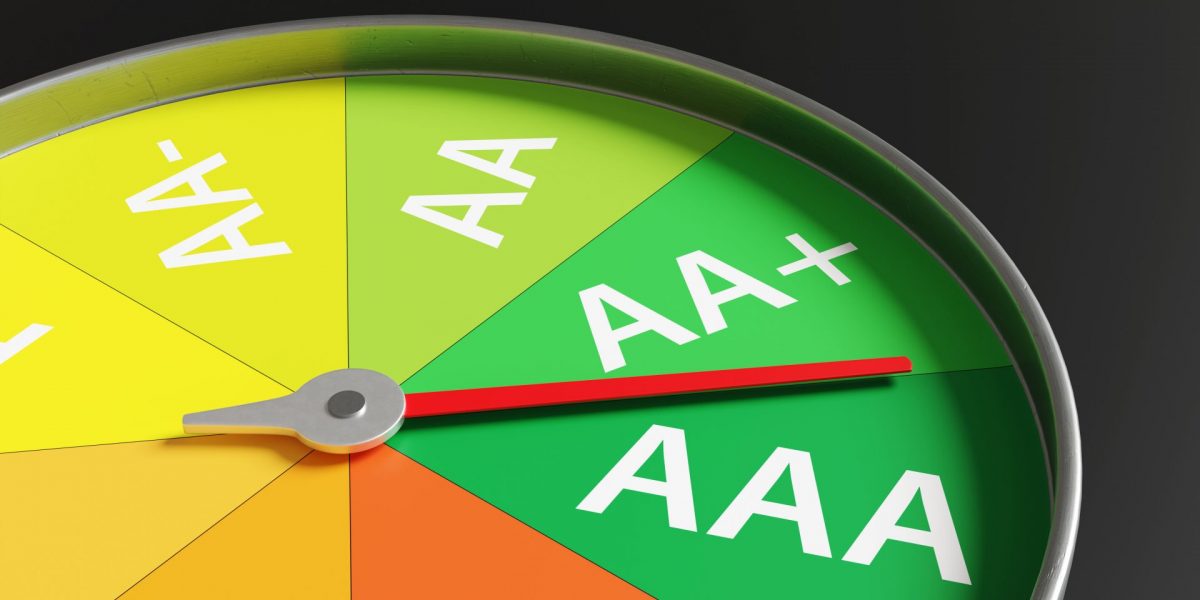
CRAs exert significant influence on markets and lending decisions by both private and public investors. The ratings by the major private CRAs, operating with a near ‘oligopolistic status’ and enjoying ‘quasi-governmental status’, have negatively impacted efforts to prevent debt crises and the subsequent resolution of such crises1Yuefen Li, Debt Relief, Debt Crisis Prevention and Human Rights: The Role of Credit Rating Agencies, UN General Assembly Reports, A/HRC/46/29 (2021)..
These CRAs have inherent structural problems that hamper their ability to adequately assess risk and bridge the information asymmetry between debtors and investors2Li, Debt Relief, Debt Crisis..This is particularly threatening when it comes to sovereign debt.
This policy brief addresses the impact of CRA ratings on development in Africa, with a particular focus on the adequacy of the methodologies of CRAs and the risk premium on African countries. It also offers recommendations on how to address the high-risk premiums faced by African countries as well as negative CRA ratings. These recommendations are based on the ongoing work being done to structure and establish an African CRA, along with global discussions on the establishment of a global fiscal body to better address global fiscal shortcomings, such as irregular assessments by CRAs based on subjective methodologies.
Impact of credit ratings on Africa’s risk premium
The current credit rating framework perpetuates a bias against developing countries. This has the effect of significantly boosting the cost of capital for countries and regional development banks alike. In her 2021 UN report, Yuefen Li notes that the three big CRAs –Standard and Poor’s, Moody’s Investors Service and Fitch Ratings – which are private and profit-seeking companies, have cross-shareholding among them, which entrenches their oligopolistic position3Li, Debt Relief, Debt Crisis..This gives the agencies little to no incentive to offer objective judgements on sovereign and private borrowers. This lack of objectivity played a significant role in the 2007–2008 global financial crisis, when CRAs were getting paid by issuers (debtors), the very entities whose debt they were supposed to rate4Daniel Cash, “The Role of Credit Rating Agencies in the ‘Debt Crisis’” (Background Note 2, UNU-WIDER, n.d.)..
Li notes further that these agencies often give their judgements based on a procyclical rating and do not take into account social indicators. Additionally, these judgements are made with an ideological bias that is exacerbated by agencies’ lack of accountability5Li, Debt Relief, Debt Crisis..The lack of accountability is based on the idea that downgrades and credit watch announcements by these agencies are considered to be opinions about the creditworthiness of the subjects of these ratings, which include sovereign states. However, it is clear that these instances of downgrading are not mere opinions but instead carry significant weight, which affects sovereigns’ access to international capital markets.
The lack of objectivity in the methodologies used by the private CRAs has a particularly adverse effect on the ability of African and other developing countries to access financing. This places an undue burden on many developing countries, which find themselves straining under the weight of debt servicing, leaving them with little to spend on human rights-geared service delivery. Private creditors and institutional investors rely on CRAs’ ratings to assess their risk appetite for sovereign debt. As a result, the current CRA disposition – marred by bias, a lack of transparency and a ‘credit rating impasse’ – has seen African states avoid much-needed programmes such as debt restructuring for fear of being downgraded6Cash, “Role of Credit Rating Agencies”..
Contrary to the requirements of objectivity, neutrality and independence (as they relate to the principle of transparency), the credit-rating mechanisms currently in place rely on subjective factors, such as expert opinion, likely to be shaped by political influence and corruption7Maria Ron Balsera, Maria Emilia Mamberti and Matthew Forgette, “Rethinking Debt Restructuring: A Rights-Aligned Approach”, in Building New Foundations: Reimagining the International Financial Architecture: Views and Proposals from Civil Society (Global Policy Forum Europe e.V., 2024)..In the recent past, two African countries – Nigeria and Kenya – have
challenged their CRA ratings8AU, “Moody’s Investor Services Erred on Its Kenya Rating Actions”, APRM, Press Release, January 28, 2025..In December 2023, Moody’s amended its rating of Nigeria from ‘stable’ to ‘positive’ after Nigeria challenged the accuracy of the rating, citing the CRA’s lack of understanding of the country’s domestic environment. Similarly, Moody’s reversed its assessment of Kenya’s situation on 8 July 2024 from ‘negative’ to ‘positive’. The negative review by Moody’s had been largely speculative and could not have taken into account the fiscal situation of the country, since the necessary fiscal instruments for the year had not been released yet9AU, “Moody’s Investor Services Erred”..
The decisions and assessments by CRAs affect the ‘business sentiment’ of investors10Balsera et al., “Rethinking Debt Restructuring”..Thus, the countries remain in a gridlock of unsustainable debt owing to the real and perceived impacts of CRAs’ actions. In effect, this exposes regional development banks serving developing countries to funding constraints, limiting their ability to lend to countries in need11Daniel Kostzer, “How Can We Mend a Broken System? Looking for Ways to Reform the International Financial Institutions”,in Building New Foundations: Reimagining the International Financial Architecture: Views and Proposals from Civil Society (Global Policy Forum Europe e.V., 2024)..A bank situated in a region with many high-risk countries is likely to be impacted by less-than-optimal ratings12 Kostzer, “How Can We Mend”..
Credit rating assessments also have negative impacts on the delivery of climate finance, given that the high cost of capital is a barrier to climate financing13Avantika Goswami and Sehr Raheja, “A Climate Finance Architecture Fit for Achieving the New Collective Quantified Goal”, in Building New Foundations: Reimagining the International Financial Architecture: Views and Proposals from Civil Society (Global Policy Forum Europe e.V., 2024)..With ratings often translating into higher interest rates and greater perceived risk, it becomes more expensive to access funding for climate projects. The capital scarcity and elevated borrowing costs, in turn, limit the scale and speed at which climate finance is deployed – particularly where transformative or infrastructure investments are needed most – exacerbating both economic vulnerability and exposure to climate shocks.
Solutions for African countries
The UNDP Regional Bureau for Africa has proposed solutions to the problems confronting African countries (and developing countries in general) owing to the decisions of CRAs14UNDP, Regional Bureau for Africa, Reducing the Cost of Finance for Africa: The Role of Sovereign Credit Ratings (UNDP, 2023)..The bureau underscores various assertions that the credit-rating methodologies adopted by the dominant CRAs are not objective. It points out that these methodologies are prone to idiosyncrasies and bias and that they tend to focus on short-term activities at the expense of long-term development, thereby exposing African countries to unfair treatment. The bureau therefore supports the calls for the establishment of a pan-African CRA and suggests reinforcing existing CRAs in Africa, which would be more responsive to the realities of the continent. It argues that a single-level improvement for 16 African countries could lead to interest savings of approximately $46 billion15UNDP, Regional Bureau for Africa, Reducing the Cost of Finance..
Other solutions include reforms to the CRA set-up in the context of the current international financial architecture. One proposal is to drive enhanced transparency in the CRA methodologies to eliminate the apparent biases against African countries16Daniel Cash and Maha Khan, Rating the Globe: Reforming Credit Rating Agencies for an Equitable Financial Architecture, Report (UNU-CPR, 2024)..Another proposal is to implement stronger international and domestic regulatory oversight measures, including the introduction of public CRAs. A third proposal is to incorporate sustainability-related data, which would see the introduction of environmental, social and governance criteria into rating methodologies. Lastly, the timelines for assessment need to be adjusted to more accurately cater for unfolding economic and environmental changes17Cash and Khan, Rating the Globe.
These proposed solutions align with the proposal to the UN General Assembly for the development of a global fiscal architecture operating with a human rights orientation18Attiya Waris, Towards a Global Fiscal Architecture Using a Human Rights Lens, A/77/169 (OHCHR, n.d.)..This fiscal architecture would see the establishment of a global fiscal body, which would allow countries to have an equal say in the setting of standards and in decisions on tax-related issues and would help them expand their fiscal space. Moreover, the global fiscal body would regulate CRAs and public debt holders, international taxation, dispute resolution and data management.
Another proposal is to establish an independent sovereign regional debt authority, which would engage with institutional and private creditor and debtor interests19Attiya Waris, The Fiscal Social Contract and the Human Rights Economy, UN General Assembly Report, A/79/142 (OHCHR, 2024)..This is a necessary step towards the protection of the fiscal social contract within the human rights economy. The reform of CRAs would afford developing countries access to financial resources, which would protect their economic, social and cultural rights, especially in special circumstances (such as during pandemics)20Attiya Waris, “How Involved Should the UN Be in Global Tax Policy and Regulation?”, IFC Review, May 1, 2024..Such reforms would see long-term economic development included as part of the CRAs’ methodologies and would ensure fairer financing mechanisms for developing countries21Waris, “How Involved Should the UN Be”..
Recommendations
Recognising these challenges, the AU has formally endorsed the creation of the Africa Credit Rating Agency (AfCRA)22AU, “African Leaders Convene on Establishment of Homegrown Solution, the Africa Credit Rating Agency”, Press Release, February 7, 2025..This independent and self-funded pan-African agency aims to eliminate some of the biases against African sovereigns and corporates by utilising a rating methodology that better reflects the realities of African economies. The AfCRA is to be based in Mauritius. As the process of establishing this institution moves forward, African countries are encouraged to be proactive and take the following actions:
Invest in data and transparency
African countries ought to prioritise the production and dissemination of audited economic data, especially reliable fiscal data, which tends to be unavailable in most African countries. Officials in finance ministries, central banks and debt offices should coordinate to produce consistent statistics to enable the proper assessment of fiscal vulnerabilities and other macroeconomic conditions.
Build debt management capacity
Empower debt management offices or ministries of finance with training to interact effectively with CRAs. This includes understanding every step of the rating process, knowing the models’ assumptions and preparing concise ‘credit pitches’ for agencies. Regional peer learning (through the West African Economic and Monetary Union, the Common Market for Eastern and Southern Africa, etc.) and partnerships with institutions such as the IMF, the African Development Bank (AfDB) and the African Peer Review Mechanism can fund such capacity building23UN Economic Commission for Africa, “Experts Highlight Need to Enhance Transparency in Sovereign Credit Rating Methodologies”, Press Release, May 20, 2025..This should be coupled with political goodwill by countries to better manage their debt and, in turn, sustainably leverage debt for their development. The political will should primarily be driven by legislative action, which may involve initiatives such as the enactment of debt sustainability laws and regulations, such as debt ceilings. The executive arm of government, as the implementor of laws and regulations, would have to take the lead. The executive would see to it that the country has enough fiscal space and that regular audits of the fiscal well-being of the country are conducted and reports presented to the legislature for oversight purposes.
Take measures to improve macroeconomic fundamentals
While a lot of attention is given to perceptions and investor confidence, sound policies remain essential. This means adopting prudent debt management strategies that avoid unsustainable short-term borrowing and support stable monetary policy and gradual growth reforms. For example, keeping inflation in check and incurring reasonable fiscal deficits can demonstrably improve ratings. Indeed, many African governments correctly argue to CRAs that their solid fiscal reforms have been ignored. It is important for countries to publicly highlight their reform milestones and engage rating analysts with up-to-date macro forecasts.