

Rapid response an elusive political project?

Preceding this month’s 25th African Union (AU) summit in Johannesburg a meeting of the AU Specialized Technical Committee on Defence, Safety and Security committed again to fully operationalise an African Standby Force (ASF) by December this year. The ASF has been ten years in the planning, and in that time has failed to establish a rapid response tool to deal with conflict on the continent.
Advancing Africa’s Position on Global Climate Finance

Unblocking the climate finance negotiations will unlock a new global agreement on climate change in Paris later this year.
Bashir, immunity, impunity and South Africa

As I write this, President al-Bashir has left the country. He should never have risked coming and the South African government should have suspected that something like this might happen.
Turkey and the G-20 Presidency: Implications for LIDCs and Africa

Turkey started its G-20 presidency in 2015 with three priorities – inclusiveness, investment and implementation – and the crosscutting themes of small- and medium-sized enterprises (SMEs) and low-income developing countries (LIDCs).
What can the African Union do to foster health development on the continent?

The focus for this year’s African Union (AU) Summit – being held on 14 and 15 June 2015 in Johannesburg, South Africa – is the ‘Year of Women Empowerment and Development towards Africa’s Agenda 2063’.
Silk, Cinnamon and Cotton: Emerging Power Strategies for the Indian Ocean and the Implications for Africa

The Indian Ocean, once a centre of gravity for the trading nations of Asia, the Gulf and coastal Africa, is on the cusp of a revival of its substantial commercial status and geo-strategic prospects. This is manifested in a number of ways.
Promoting the Integrated Governance of South Africa’s Coastal Zone

The effective management of the coastal zone is linked directly to the long-term development and wellbeing of coastal populations. Its importance warrants a dedicated management approach to balance its development, use and protection.
Effective Governance Central to Unlocking the Potential of the Blue Economy
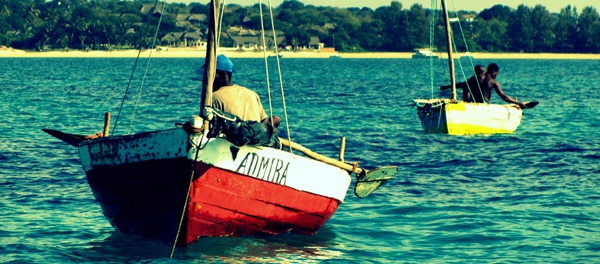
The global economy loses $50 billion every year as a result of poor management of global fish stocks. That figure doesn’t tell the full story of how overfishing, illegal fisheries and environmental degradation impact the livelihoods of coastal and riparian communities, particularly in developing states.
The importance of protecting the globe’s most important ecological assets

Every year, the United Nations Environment Programme celebrates the World Environment Day on 5 June to raise awareness about environmental issues, reflect on what has been accomplished and call for sustained action globally.
Collection: Benchmarking Foreign Direct Investment in Southern Africa

Foreign direct investment (FDI) has been a hot topic in South Africa, following the government’s unilateral cancellation of bilateral investment treaties (BITs) with the European Union and the release of the draft Promotion and Protection of Investment Bill. But what is FDI, and why is it important? What are the other issues at play in the region when it comes to investment?